
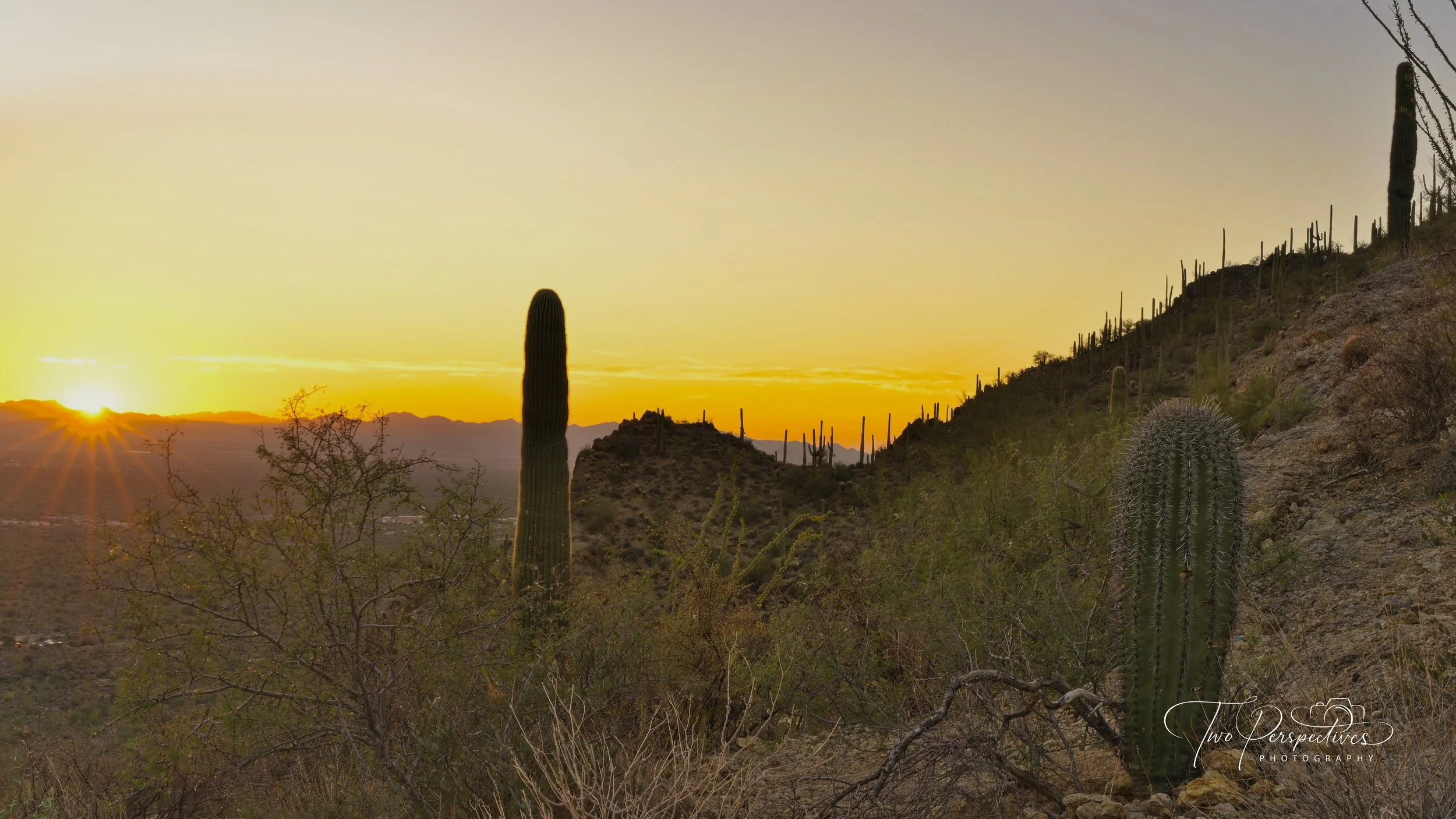
Sonoran Desert Wildlife Spotlight series
where we share a little about the creatures we love to photograph here in southern Arizona
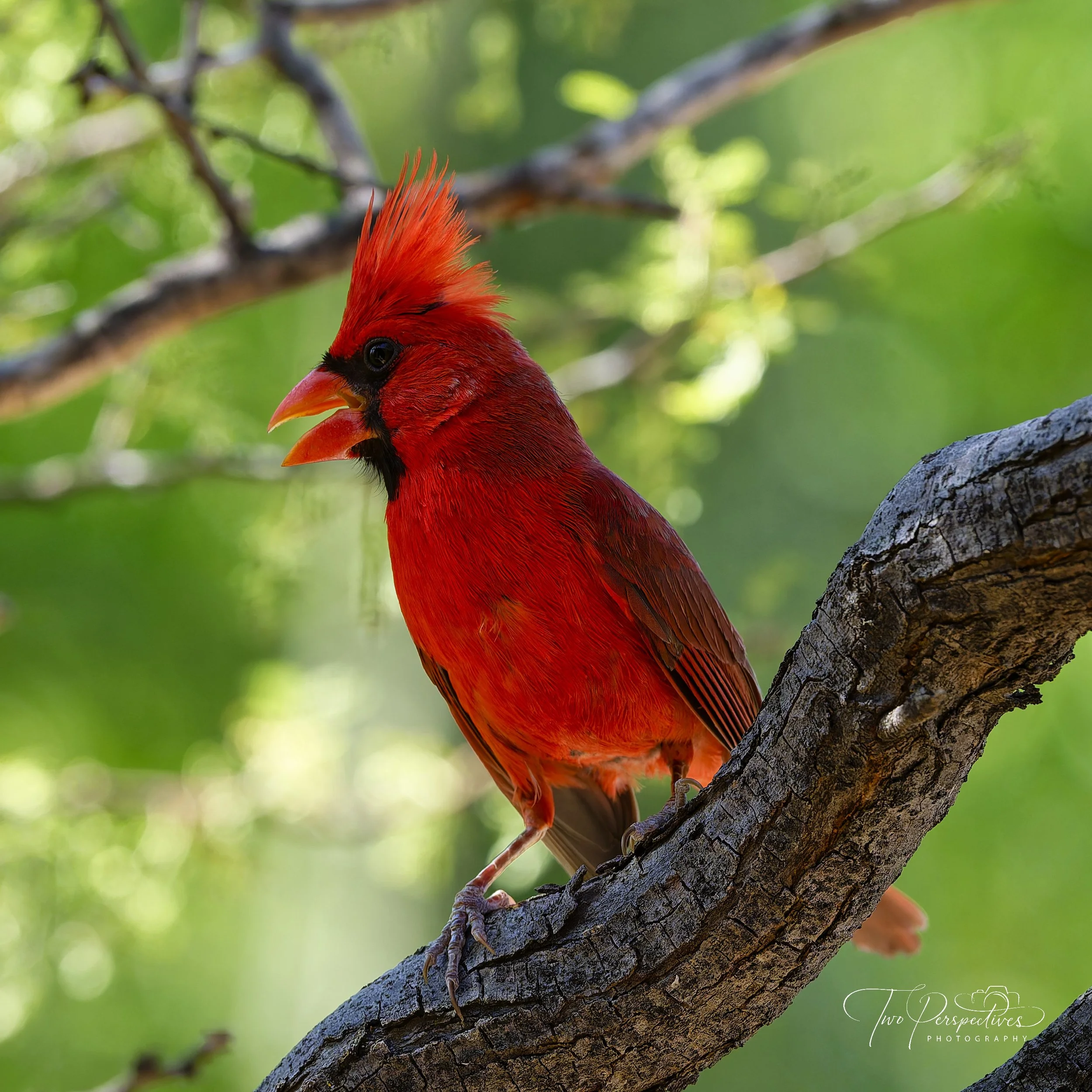
Cardinals
Arizona has a professional football team named the Cardinals, and yet, say the word "cardinal" and most people don't picture the desert at all. They picture a snowy branch on a holiday card, a flash of red against a white winter backdrop somewhere back east. So, it comes as a delightful surprise to many that cardinals are very much desert birds here in southern Arizona. In fact, we're lucky enough to have not one, but two kinds, and the second is a desert specialty most visitors have never heard of.
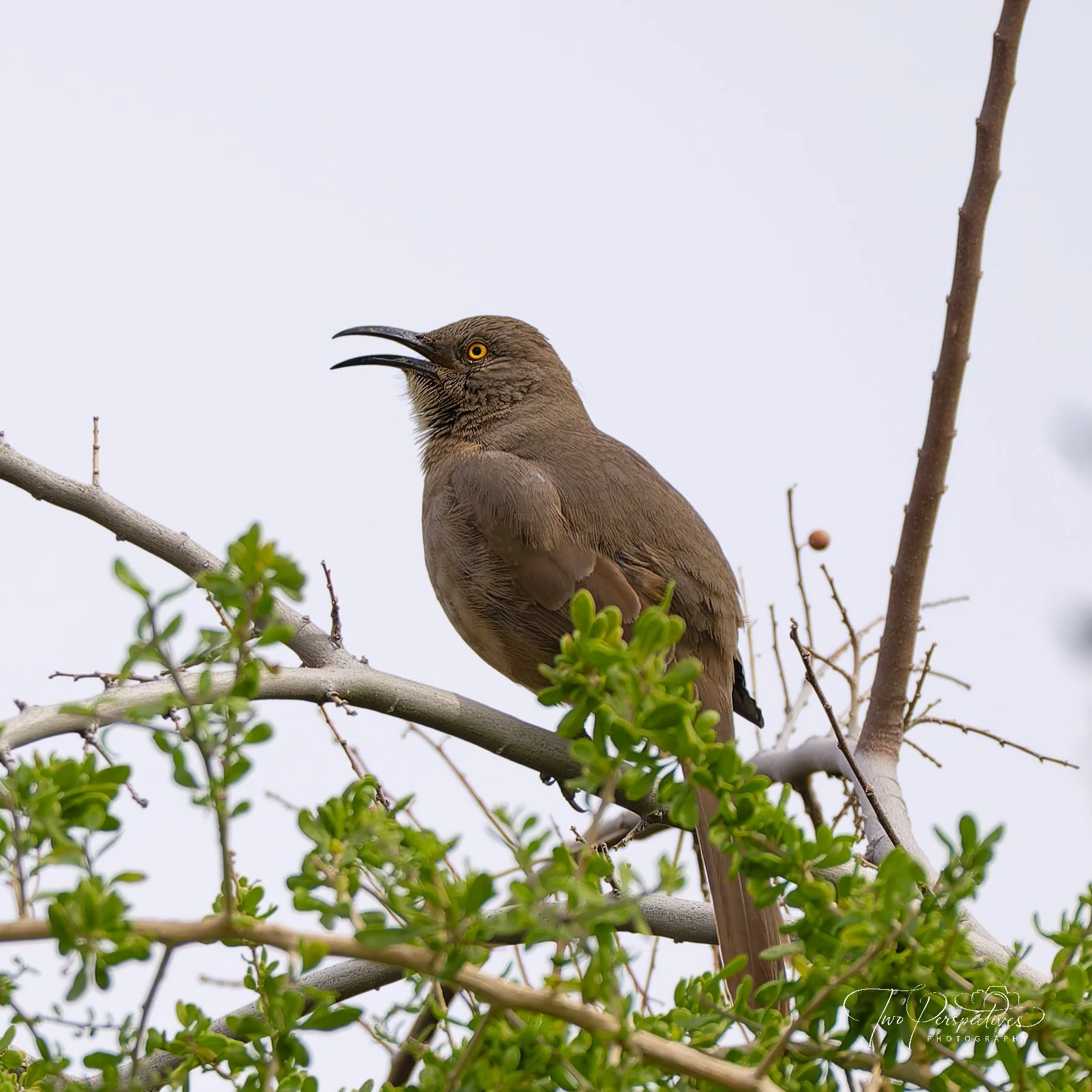
Curve-billed Thrasher
If you've spent a morning in the Sonoran Desert, you've heard it whether you knew the singer or not: a sharp, insistent whit-wheet! whistle, exactly like someone trying to get your attention across a parking lot. That's the calling card of the curve-billed thrasher, one of the desert's boldest, most charismatic, and most musically gifted residents. Gray-brown and long-tailed, with a gracefully down-curved bill and a pair of striking orange eyes, this bird carries itself with a kind of grumpy, confident authority, and it has a great deal to say.
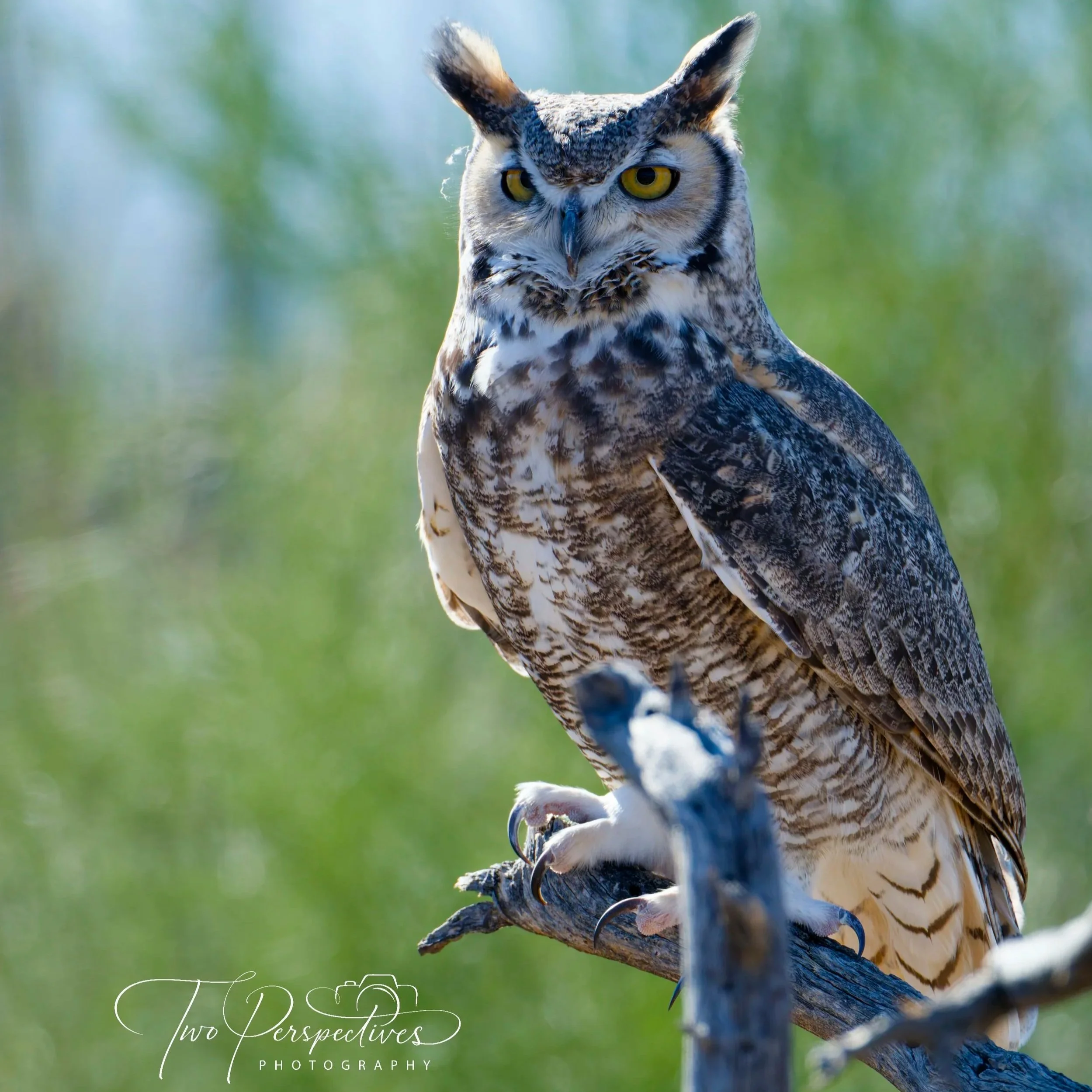
Great Horned Owl
Before the desert has fully committed to night, when the sky still holds the last pale blue of dusk and the saguaros are becoming silhouettes, the Great Horned Owl begins. That deep, resonant hooting, a few slow, measured notes drifting across the wash, is one of the most primal sounds the Sonoran Desert makes. It isn't subtle and it isn't soft. It lands in the chest. And the bird behind it, perched on a prominent snag with those ear tufts outlined against the fading sky, is every bit as commanding as the voice.
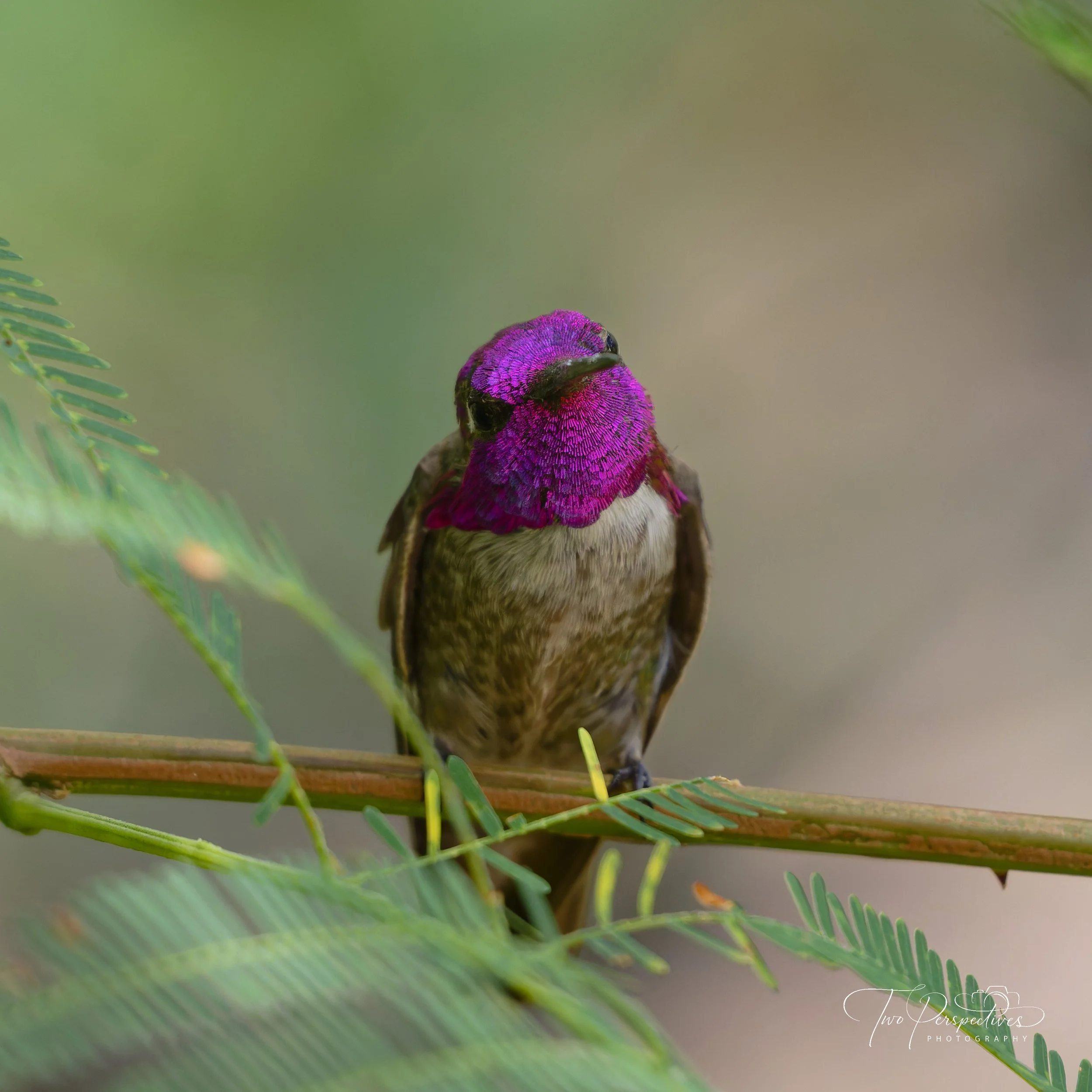
Anna's Hummingbird
Most hummingbirds are visitors, passing through on migration, spending a season, then gone. Not the Anna's. This rose-crowned little gem is Tucson's year-round hummingbird, the one holding court at backyard feeders in January, defending its territory in the heat of July, and filling the winter air with its scratchy, buzzing song when every other hummingbird has long since headed south. If you have a feeder up in Tucson, you almost certainly have an Anna's.
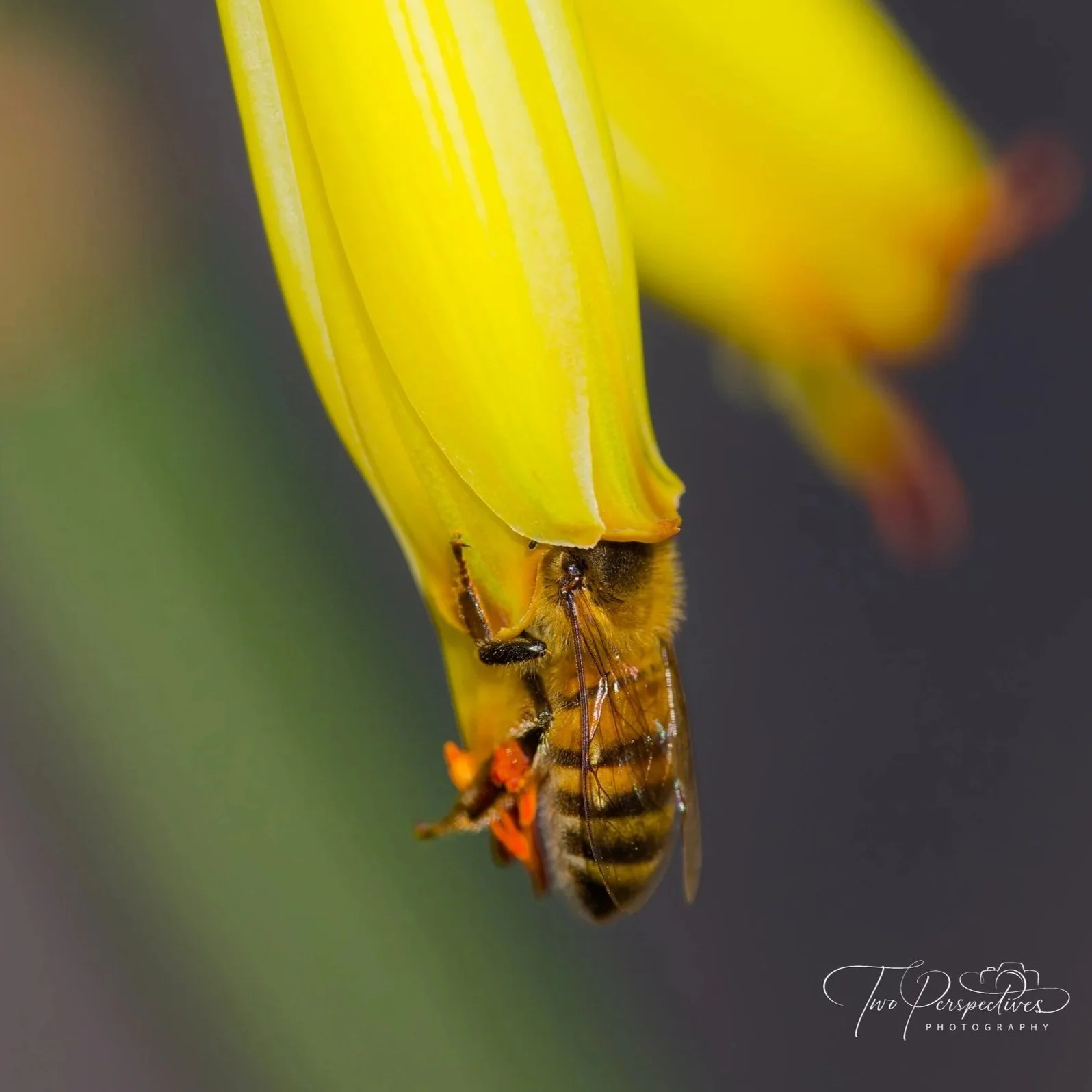
Western Honey Bee
In late spring, when the saguaro arms erupt in white blossoms against the blue desert sky, the honey bees arrive. They work the flowers one by one, their bodies so deep in the blooms that they come away dusted head to thorax in white pollen. It is one of the most quietly spectacular scenes the Sonoran Desert has to offer, and every year we look forward to it.
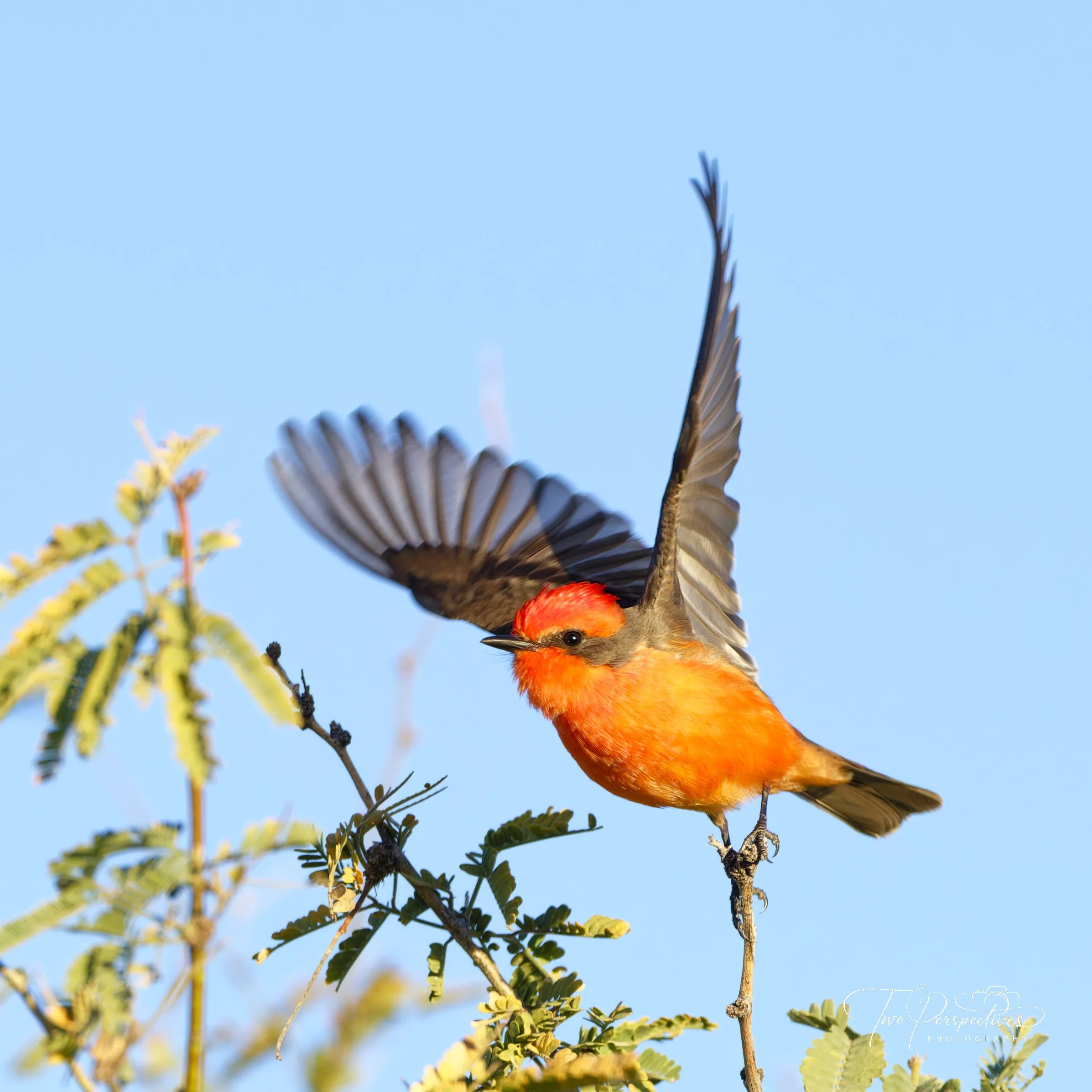
Vermilion Flycatcher
If you spend much time near water in the Tucson area, you will eventually see a small bird perched on a wire or exposed branch that looks like someone spilled red paint over a piece of coal. The male Vermilion Flycatcher is that kind of bird, the kind that makes you stop mid-stride and reach for your binoculars. He weighs less than half an ounce, and he is probably the most vivid thing in the landscape.
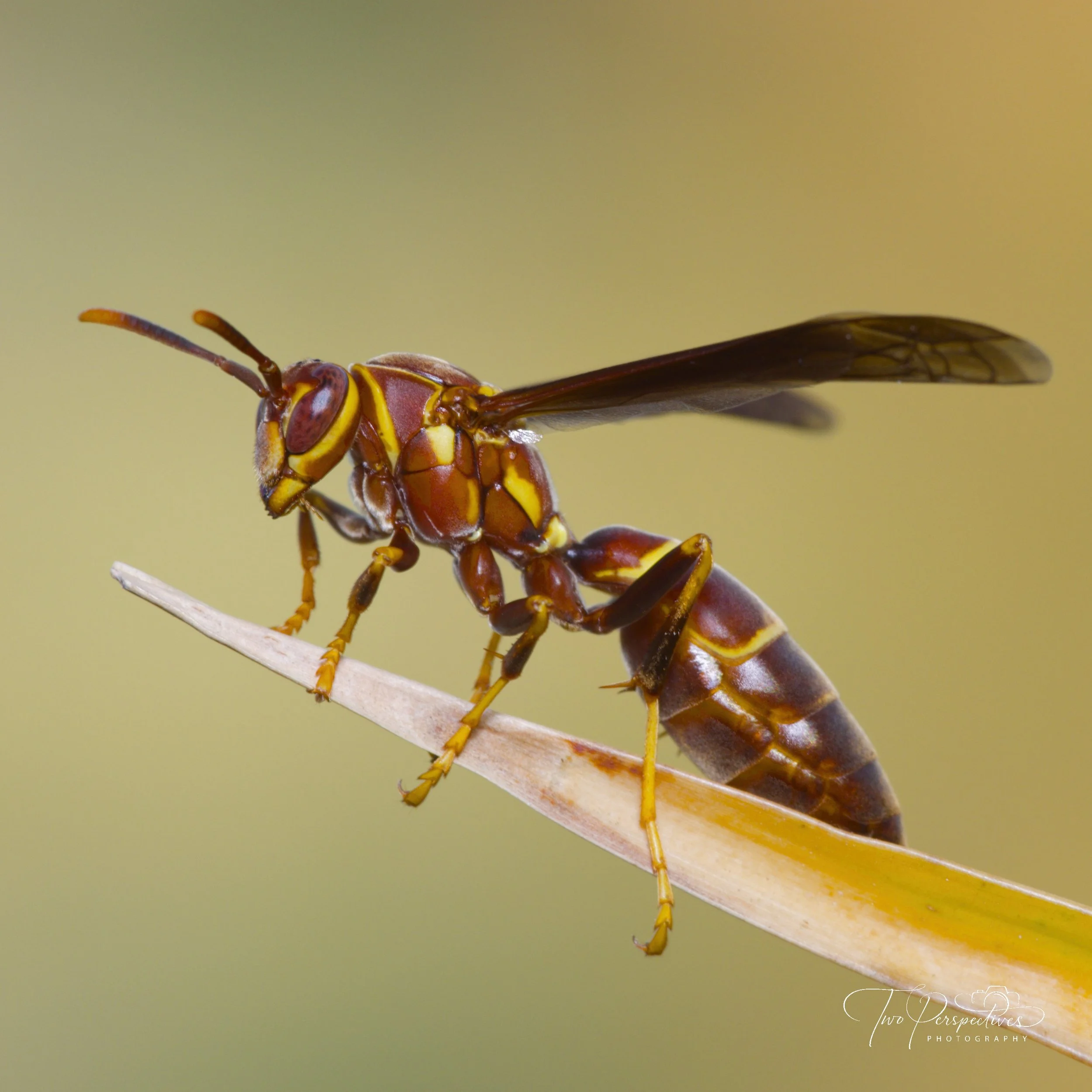
Paper Wasp
Walk past a roof overhang in July and there is a good chance you will find a paper wasp nest without looking. A small gray comb of hexagonal cells, smaller than your palm, hangs from a thin stalk with each cell open at the bottom. If the colony is active, you can see eggs or pale larvae curled inside, and a few wasps stationed on the surface, watching.
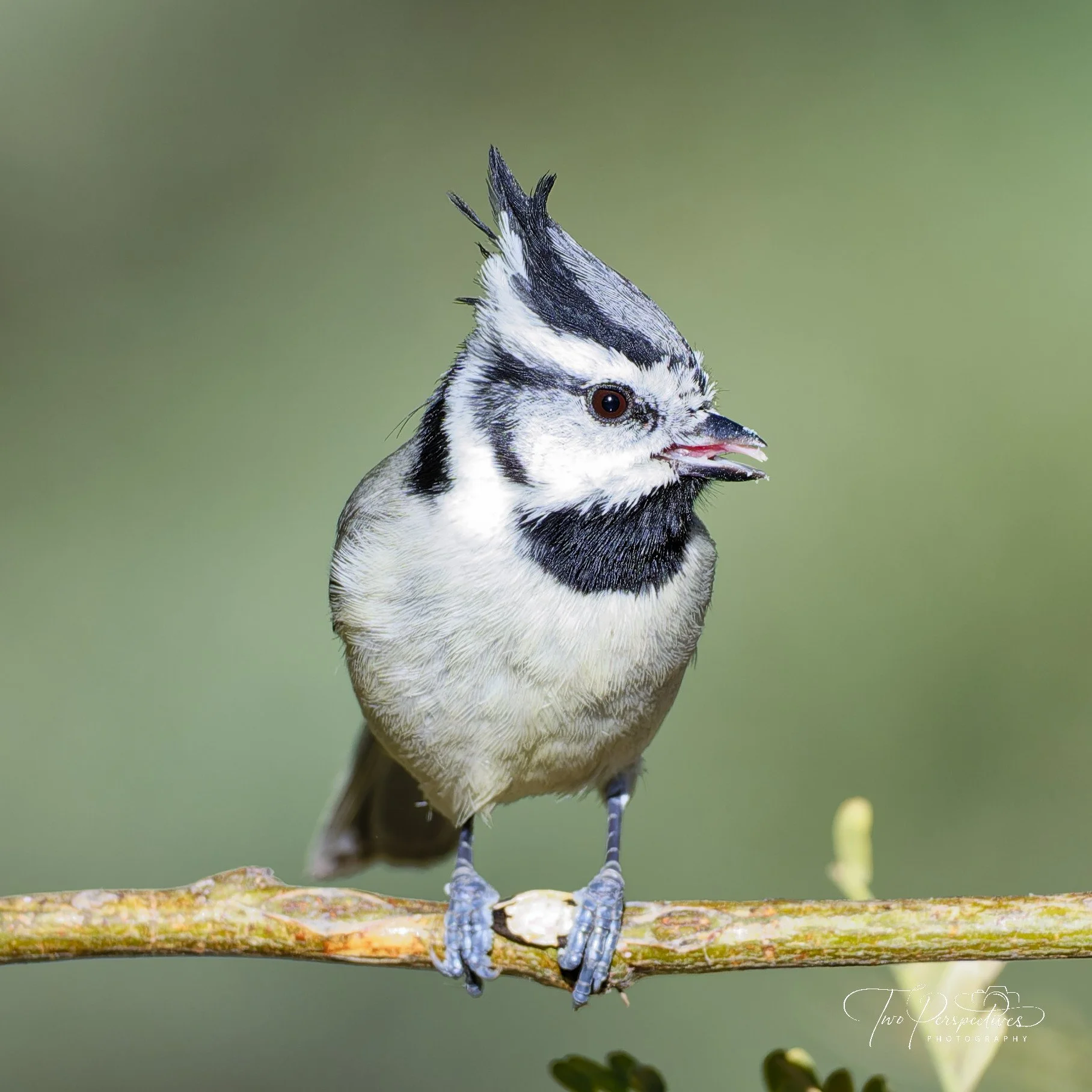
Bridled Titmouse
You hear them before you see them. A chattering, fussing little flock moving through the oaks, and suddenly there one is, a bird about the size of a sparrow but with a face that stops you cold. The Bridled Titmouse carries one of the most distinctive patterns in all of North American birdlife: a swirling black-and-white face design that looks like it was painted on with a fine brush. If you spend any time in the oak and pine-oak canyons of southeastern Arizona, you will meet this bird. And once you do, you will not forget it.
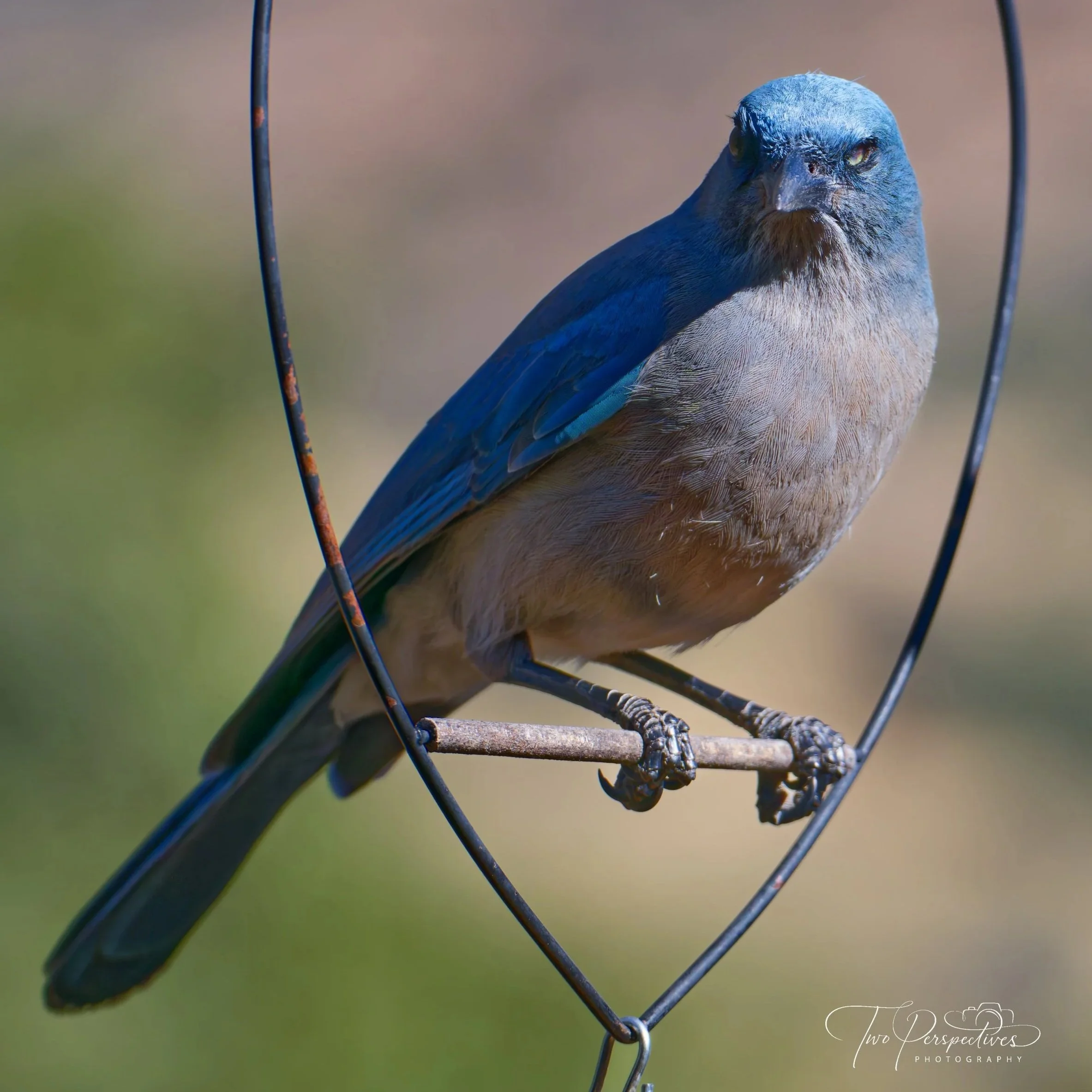
Mexican Jay
Walk into an oak canyon in the Chiricahuas or up through Madera Canyon and you will almost certainly hear the Mexican Jay before you see it. A loud, rough wenk or shrink, repeated fast. Then the flash of dull blue wings in the oaks, and suddenly you have a dozen of them moving through the canopy around you. They are not shy. They come close, hop between branches, and seem genuinely curious about what you are doing in their territory. We have spent more than a few mornings simply standing still and letting them work around us.
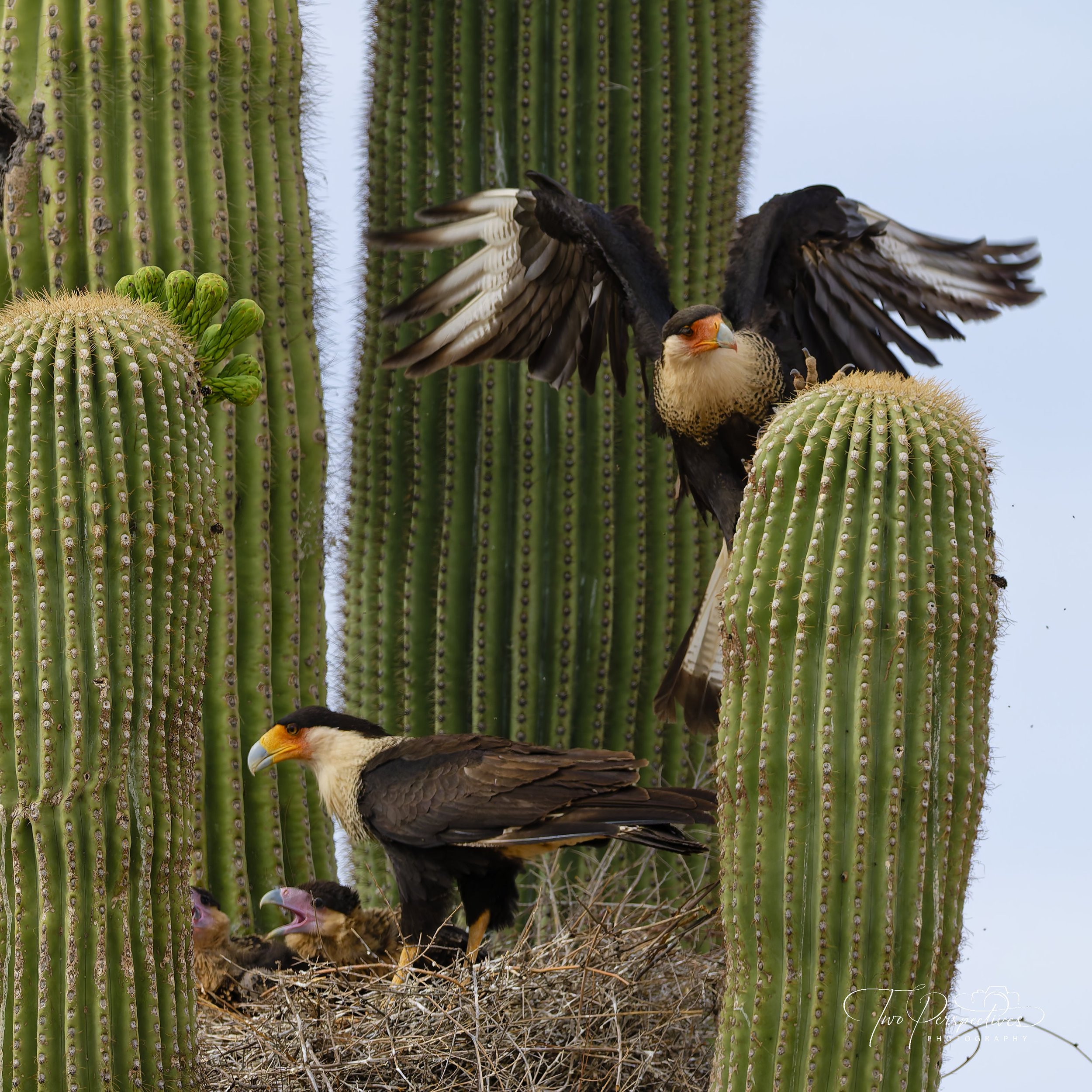
Crested Caracara
Every now and then you spot a bird so striking and full of personality that it stops you in your tracks. For us, the Crested Caracara is one of those birds.
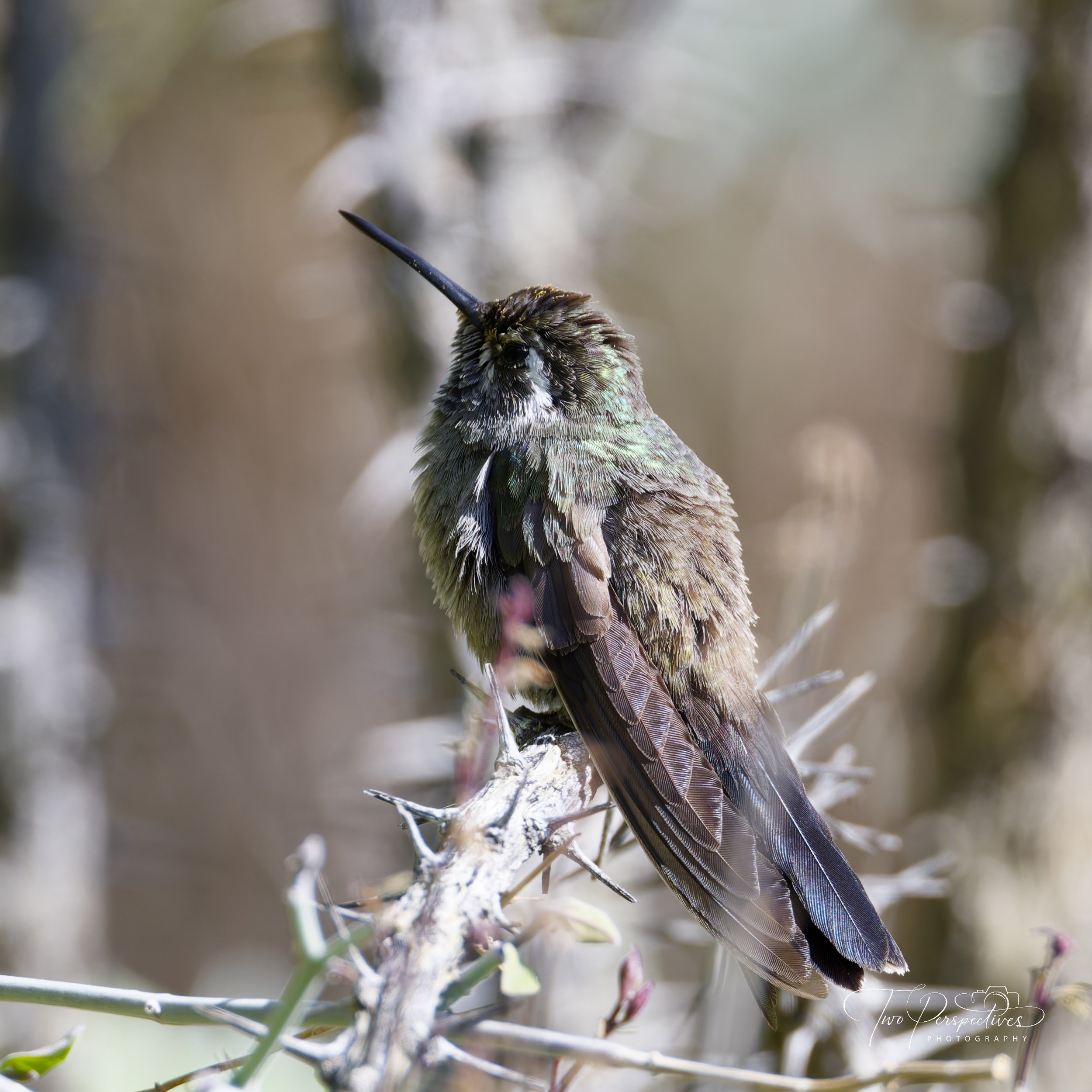
Blue-throated Mountain Gem
Most hummingbirds make you lean in to see them clearly. The Blue-throated Mountain Gem, known until recently as the Blue-throated Hummingbird, has the opposite problem. It's so large and moves with such commanding presence that the first time you see one at a feeder alongside other hummingbirds, your brain briefly refuses to accept that it's the same kind of bird. The largest hummingbird regularly occurring in the United States, the Blue-throated Mountain Gem doesn't dart and vanish like its smaller relatives. It arrives, it lands, and it holds its ground.
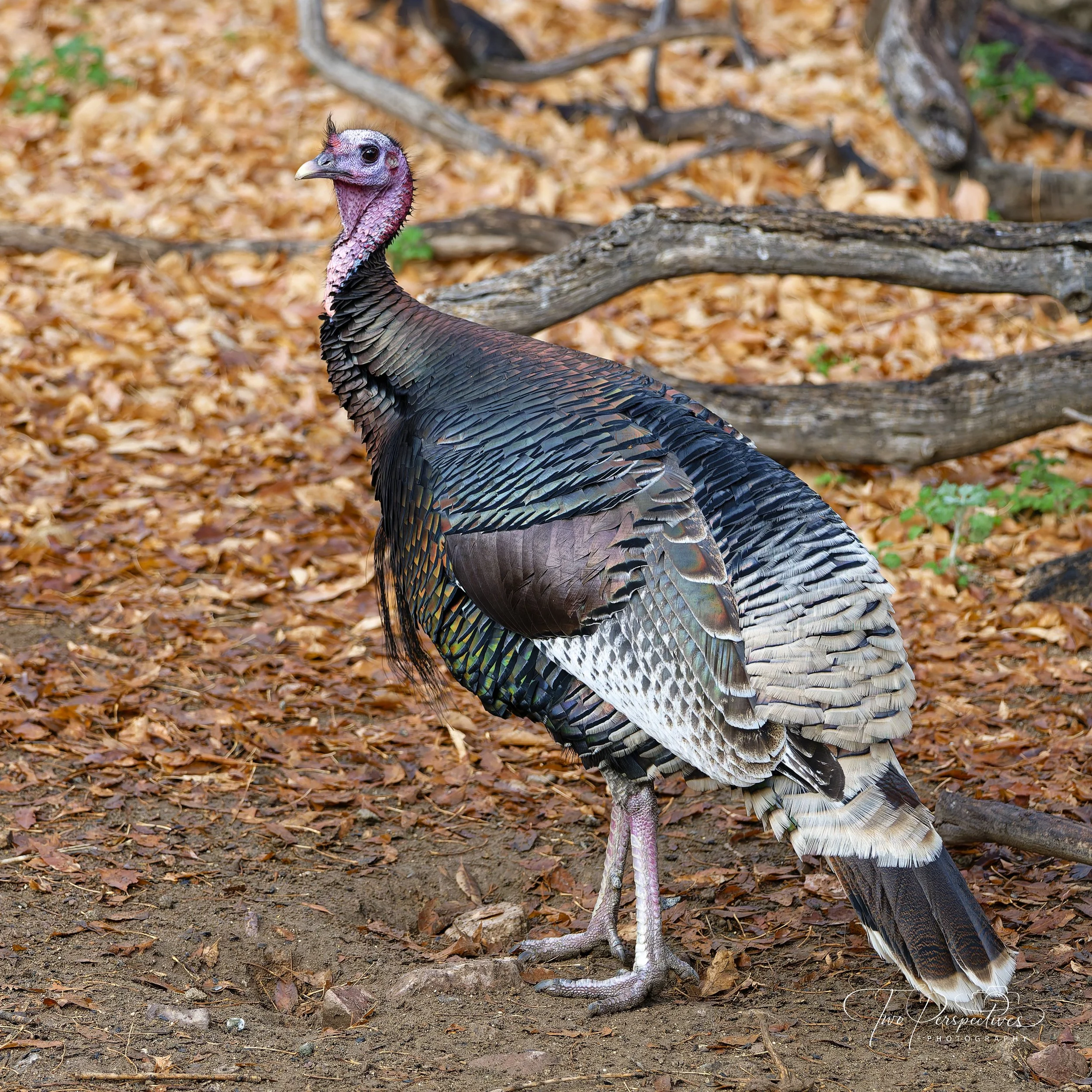
Wild Turkey
Most people's mental image of a turkey involves a grocery store. The bird in the wild is something else entirely. Wild turkeys are large, sharp-eyed, and surprisingly fast on their feet. They can also fly, which catches a lot of people off guard. When you hear one gobble from inside a pine canyon in the Chiricahuas on a spring morning, it sounds like nothing else out there, and it carries farther than you'd expect.