Cardinals
Arizona has a professional football team named the Cardinals, and yet, say the word "cardinal" and most people don't picture the desert at all. They picture a snowy branch on a holiday card, a flash of red against a white winter backdrop somewhere back east. So, it comes as a delightful surprise to many that cardinals are very much desert birds here in southern Arizona. In fact, we're lucky enough to have not one, but two kinds, and the second is a desert specialty most visitors have never heard of.
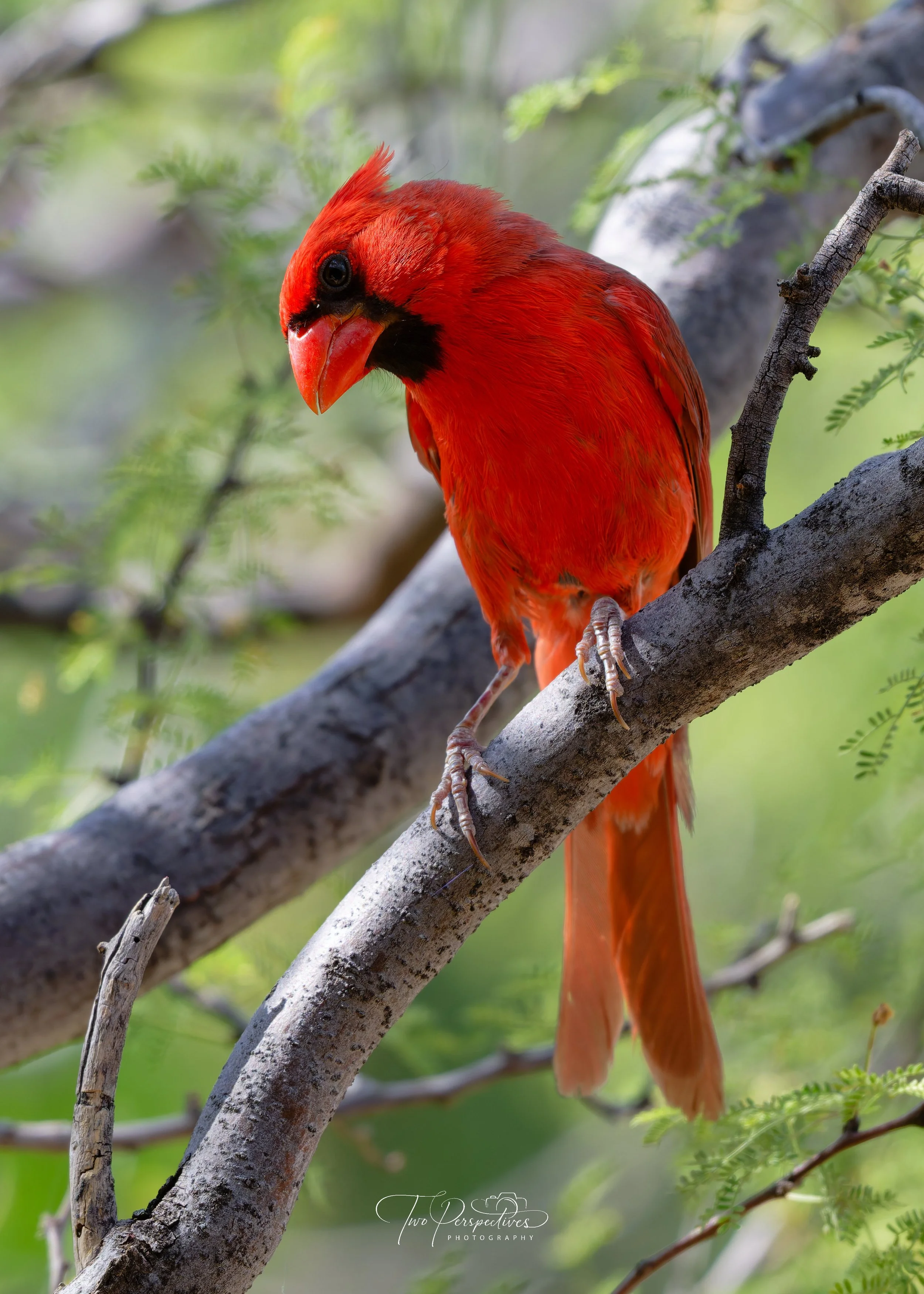
The Northern Cardinal, at home in the desert
The bird on all those Christmas cards is the Northern Cardinal, and Arizona is one of only three western states lucky enough to host it. Most of its range lies in the East and Midwest, where it's so beloved, it's been named the state bird of seven different states. So how does this icon of snowy backyards end up thriving among the saguaros? Beautifully, as it turns out. Our brushy desert washes, mesquite thickets, and riparian corridors offer everything a cardinal needs: seeds, fruit, insects, cover, and nesting spots in dense, low vegetation.
The male is unmistakable. That brilliant all-red body, the jaunty crest, the black mask, and a stout reddish bill. The female is dressed more subtly in warm brown with red accents, the better to stay hidden on the nest. Here's a lovely detail many people don't know: unlike most songbirds, where only the male sings, the female cardinal sings too, often in spring, a duet that seems to help strengthen the bond with her mate. They're year-round residents, seasonally devoted pairs, and they'll happily visit a backyard feeder stocked with sunflower seeds, a cheerful splash of crimson against the desert tan.
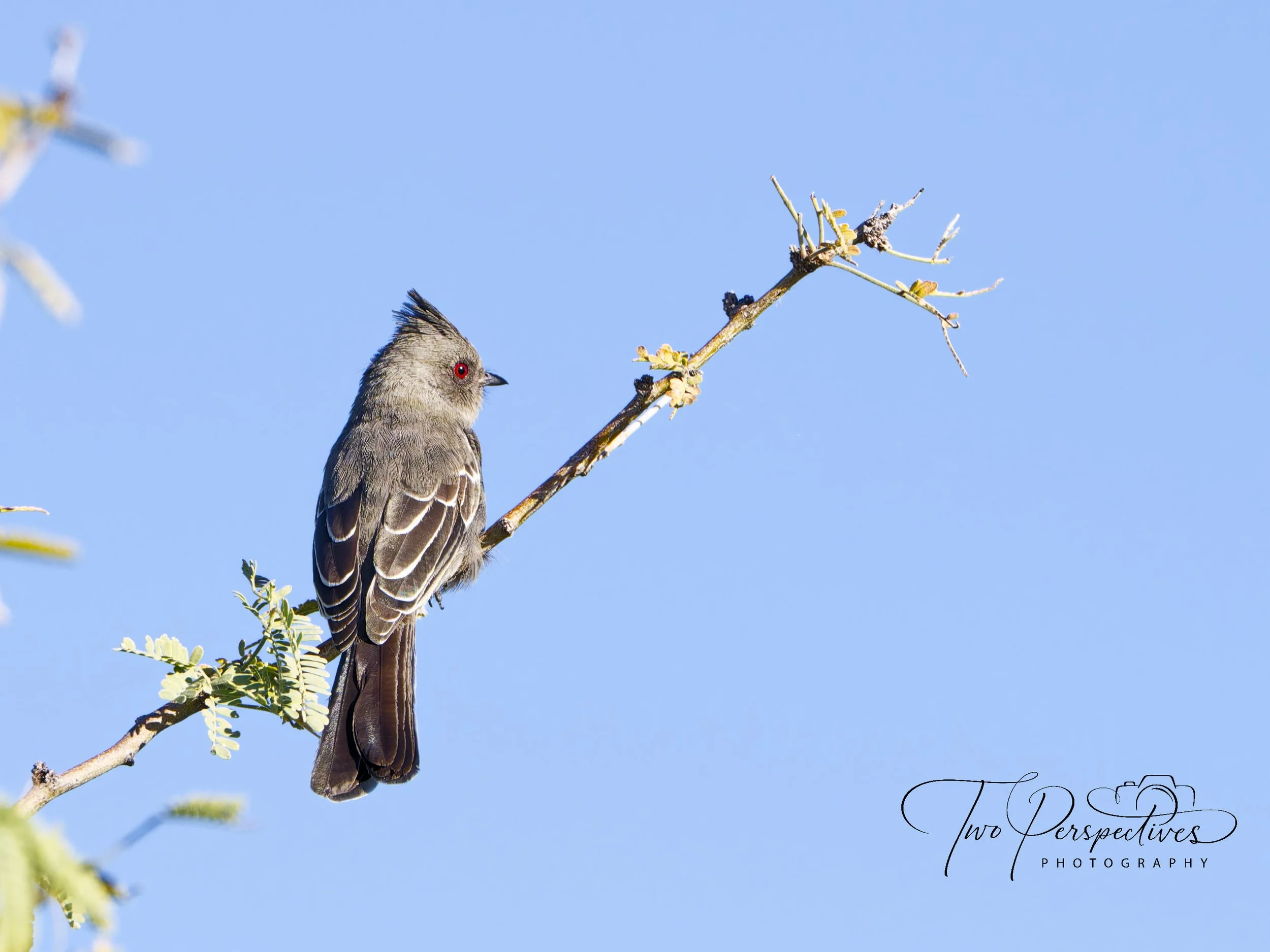
The Pyrrhuloxia, our "desert cardinal"
Now meet the bird that makes Arizona special. The Pyrrhuloxia (say "purr-uh-LOX-ee-uh") is so closely related to the Northern Cardinal that it's often simply called the desert cardinal. Picture a cardinal rendered in soft gray, with the red pulled back to just the highlights: a red-tipped crest, a blush of rosy red down the face and breast, and a stout, curved, parrot-like yellow bill. The effect is understated and elegant. A cardinal in desert camouflage.
That name! "Pyrrhuloxia" comes from Greek words meaning, roughly, "flame-colored" and "crooked," a nod to its reddish tint and its distinctive kinked bill. It's a mouthful, which is exactly why most of us are happy to just call it the desert cardinal.
The Pyrrhuloxia is a true desert bird, even hardier than its red cousin when it comes to dry, open country, thriving in desert scrub, mesquite, and washes where water is scarce. Its song is so similar to the Northern Cardinal's that the two can be genuinely tricky to tell apart by ear. In winter, Pyrrhuloxias become surprisingly social, gathering into foraging flocks that can occasionally number in the hundreds or more. Where the two cardinals' ranges overlap, as they do right around Tucson, they've even been known to hybridize.
Telling the two apart
It's easier than it sounds. The male Northern Cardinal is mostly red with a black face and a red bill, while the male Pyrrhuloxia is mostly gray with red accents and that unmistakable stubby yellow bill. The females are the real challenge, both are soft and subtly colored, but the bill gives them away: straight and reddish on the Northern Cardinal, curved and yellow on the Pyrrhuloxia.
Where and when to find them
Both cardinals live here year-round, so any season is a good one. Look for the Northern Cardinal in the shadier desert washes, mesquite bosques, leafy riparian areas, and suburban yards with dense shrubs, especially near water. Pyrrhuloxia favors the drier, more open desert scrub. Luckily for us, both turn up together in many spots around Tucson, and a backyard offering sunflower seeds, a little water, and some sheltering shrubs is one of the best ways to invite them in.
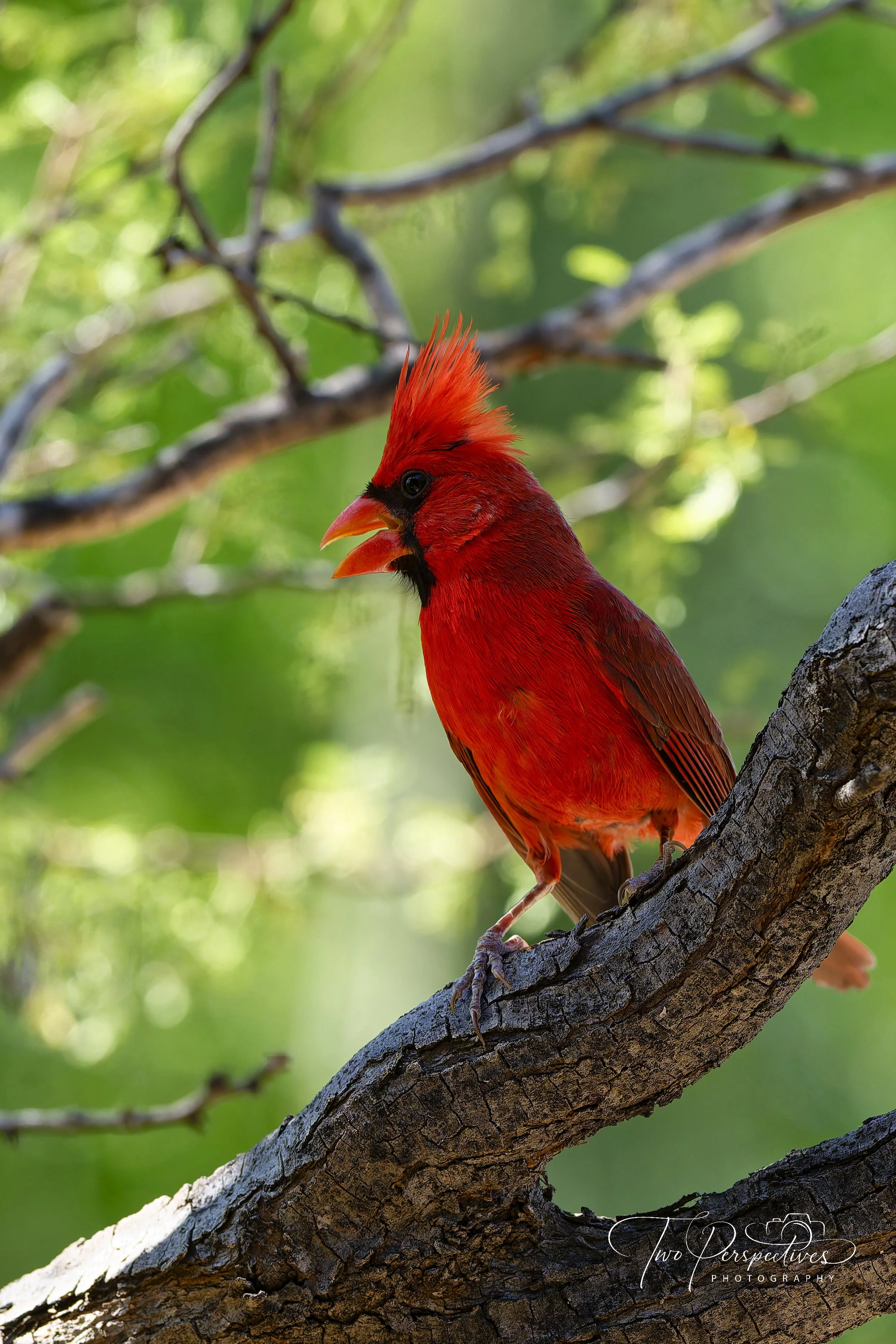
Capturing them
A red bird against a desert backdrop is one of the most striking images a wildlife photographer can hope for, and the Pyrrhuloxia's subtle gray-and-rose palette is a quieter joy all its own. We love the challenge of catching that pop of crimson amid the greens and golds of the desert, proof that the desert is full of color if you know where to look. So, the next time you think of cardinals, picture the saguaros, because here, that's exactly where they belong.