Costa’s Hummingbird
If any hummingbird was built specifically for the Sonoran Desert, it's the Costa's. Where other hummingbirds arrive for the blooms and leave before the heat, the Costa's leans into the desert on its own terms, nesting in late winter when the ocotillo and brittlebush are just beginning to flower, then drifting to cooler ground before the summer temperatures that drive most creatures to shade. The Tucson area is one of the best places in the entire country to find one, and once you've seen that amethyst-purple mustache catch the light, you'll understand why desert birders chase this bird specifically.
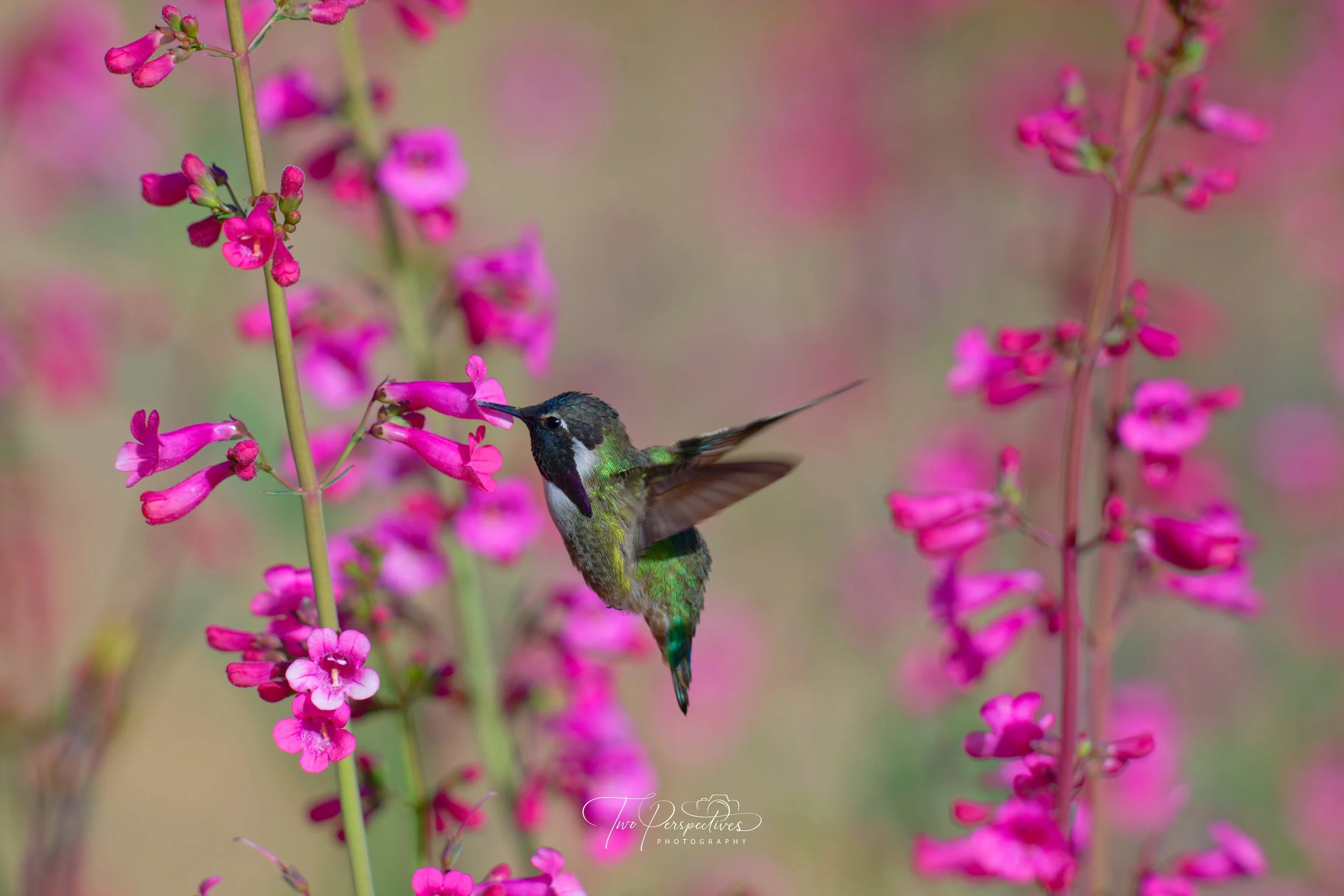
The purple mustache
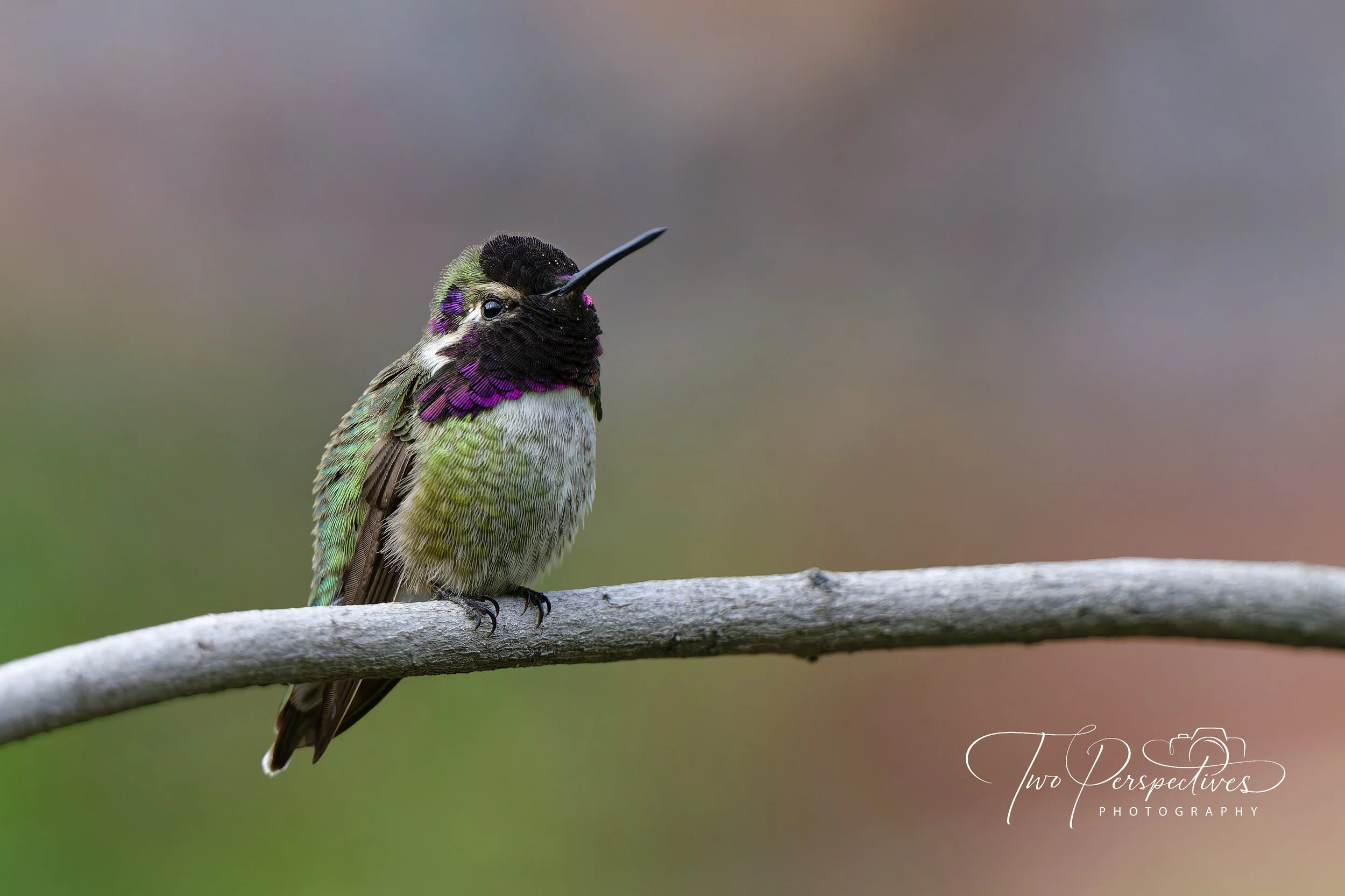
The male Costa's Hummingbird has one of the most striking appearances of any hummingbird in North America. His throat is not just purple. It flares out dramatically to both sides, extending past his cheeks in long, sweeping plumes that look almost comically like a Victorian gentleman's mustache. In low or flat light, the throat reads as dark and unremarkable. Then he shifts his angle to the sun and the whole thing ignites into a blaze of vivid purple, there and gone in an instant. His courtship display amplifies the effect: he swings in wide, pendulum loops around the female, the purple flaring with each pass. It's a performance built entirely around that one spectacular feature.
Our wild neighbors
The Costa's is one of the few hummingbirds that has genuinely adapted to true desert conditions rather than just tolerating them. It nests earlier than almost any other hummingbird in the region, timing its breeding to coincide with the late winter and early spring blooms of desert plants like brittlebush, desert lavender, and chuparosa. By the time the heat of May and June arrives, many Costa's have already raised their young and shifted their range. The Arizona-Sonora Desert Museum is one of the most reliable places to see them year-round, and they turn up regularly at feeders and desert gardens across the Tucson area from winter through spring.
A few fun facts
The Costa's is named for Louis Marie Pantaleon Costa, a 19th-century French nobleman and hummingbird enthusiast who helped fund natural history collecting expeditions.
Males produce a distinctive high-pitched, rising whistle during courtship, an eerie, almost insect-like sound unlike anything else at a desert feeder.
They have the smallest body size of any regularly occurring hummingbird in the Tucson area, making that oversized purple mustache even more theatrical by comparison.
Unlike the Anna's, which nests in winter and stays year-round, the Costa's follows the desert blooms, some birds linger, but many move on as summer heat builds.
The female builds her tiny nest, often camouflaged with lichen and plant down, in low desert shrubs and cactus, frequently lower to the ground than other hummingbird species.
Attracting them
Costa's respond well to the same setup that draws other hummingbirds, with clean feeders with fresh sugar water and native desert blooms. The difference is timing. They're most reliably in Tucson yards from late fall through spring, so keeping feeders stocked through winter pays off. Native desert plants like chuparosa, desert lavender, and brittlebush are particularly attractive to them and provide natural nectar that supplements feeder visits. If you want to maximize your chances of a Costa's in your yard specifically, the Arizona-Sonora Desert Museum's plant list for hummingbird gardens is a good reference.
One important note: if you put up a feeder, you must keep it clean and the nectar fresh. Stale or fermented sugar water can cause candidiasis, a fungal infection that causes swelling of the tongue and leaves hummingbirds unable to eat. In southern Arizona's heat, that means changing the nectar more often than most people realize. A rough guide: at 90°F and above, change it every day. At 80 to 89°F, every two days. At 70 to 79°F, every three days. No matter the temperature, change it every five days at minimum. A feeder that isn't maintained is worse than no feeder at all.
Where and when to find them
Winter through spring is the prime window, roughly November through April, before many birds shift their range for the season. The Arizona-Sonora Desert Museum is a reliable year-round spot. Desert gardens with native plantings anywhere in the Tucson area can produce them. Look for the characteristic wide pendulum display flight of the male, and listen for that high, rising whistle, it often announces the bird before you see it.
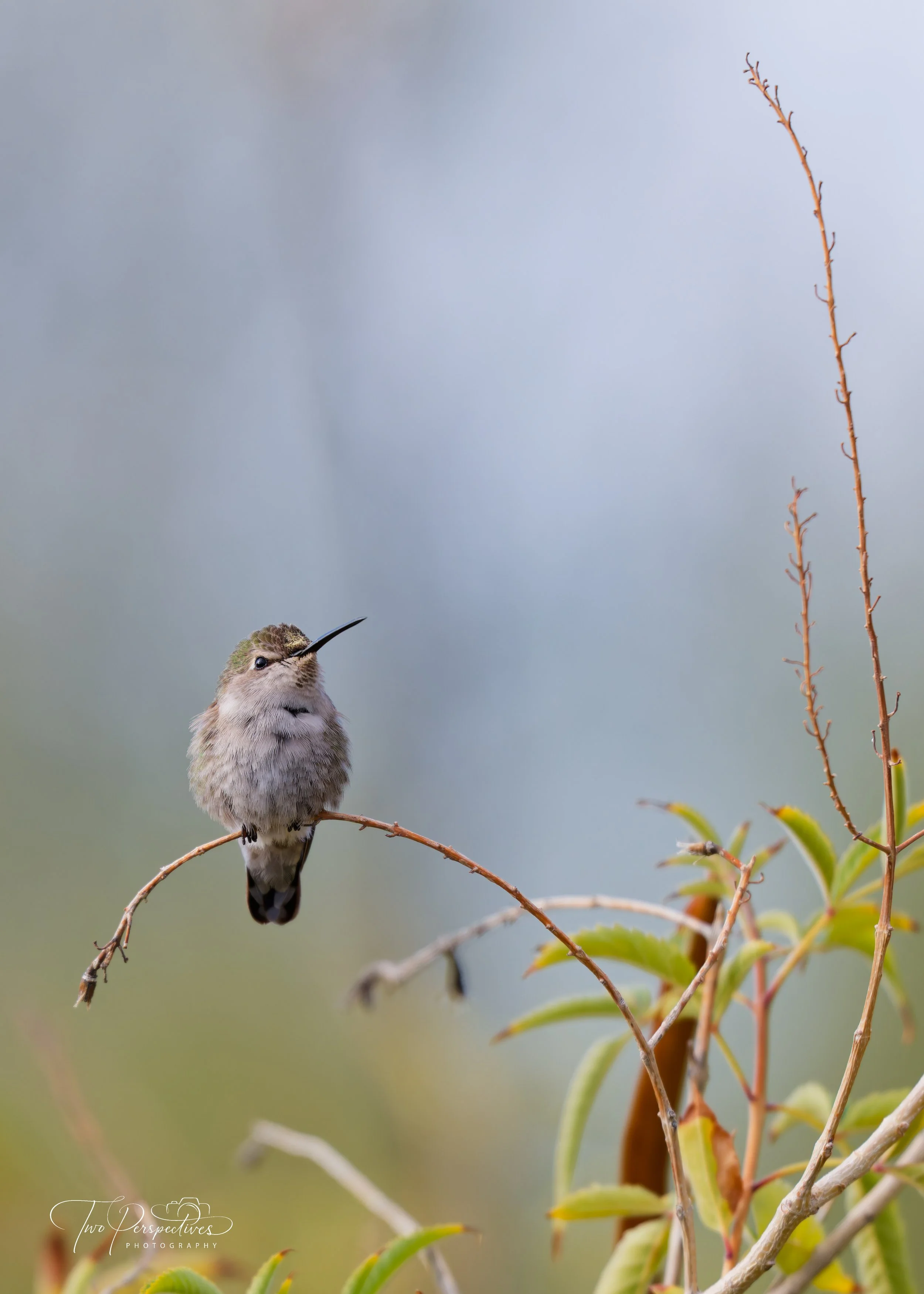
Capturing them
The Costa's gorget is one of the great photographic challenges in Sonoran Desert bird photography. The purple only shows in the right angle of light, which means patience, positioning, and a fair amount of luck. We love working the morning feeders at spots like the Desert Museum, where the birds are accustomed to people and the light comes in at useful angles early in the day. Catching the full flare of that mustache in good light, the whole thing blazing amethyst against a clean background, is one of those shots that justifies a lot of hours at the feeder.