Paper Wasp
Walk past a roof overhang in July and there is a good chance you will find a paper wasp nest without looking. A small gray comb of hexagonal cells, smaller than your palm, hangs from a thin stalk with each cell open at the bottom. If the colony is active, you can see eggs or pale larvae curled inside, and a few wasps stationed on the surface, watching.
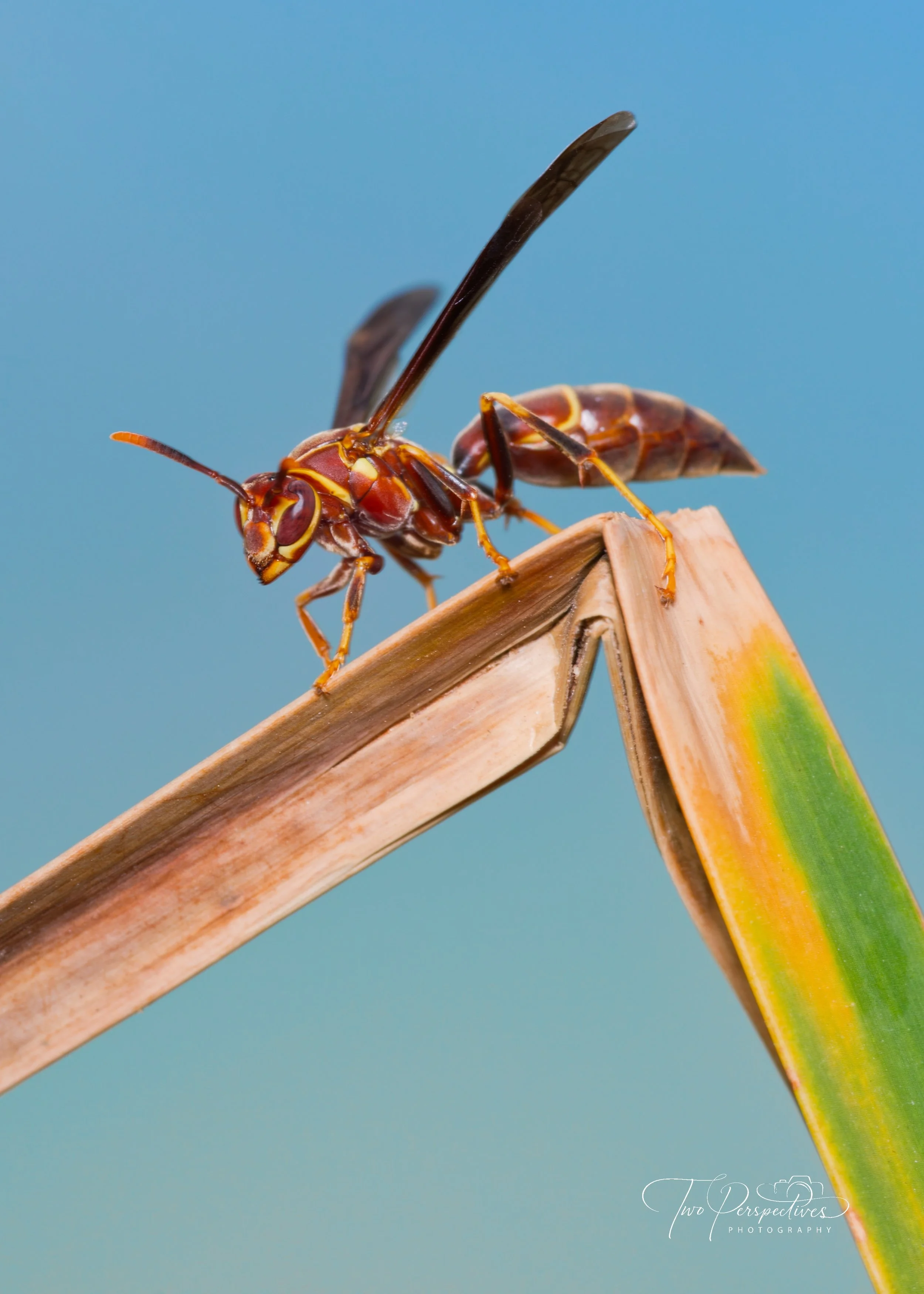
Built from scratch every spring
Every paper wasp colony starts with a single queen who survived the winter. In early spring she finds a sheltered spot and begins building alone, chewing wood fiber from old or dry wood and mixing it with her saliva to form a gray paper pulp. She shapes the first cells, lays eggs, and then hunts caterpillars, which she chews into a soft paste and delivers to the hatching larvae in repeated small meals throughout their development. When her first daughters emerge they take over most of the foraging and maintenance, and the colony grows through spring and summer from there.
Our wild neighbors
Several Polistes species call the Tucson area home. The yellow paper wasp (Polistes flavus) is the most frequently documented in Arizona, with nearly a thousand research-grade iNaturalist observations in the state. The Arizona paper wasp (P. arizonensis), the golden paper wasp (P. aurifer), and the Comanche paper wasp (P. comanchus) are also well-represented. In total, the genus Polistes has accumulated more than 3,700 research-grade observations across Arizona.
A few fun facts
With over 200 recognized species worldwide, Polistes is the single largest genus within the wasp family Vespidae
Their nests are made from wood fiber chewed off old or dry wood and mixed with saliva, forming a lightweight gray paper material
Colonies are small by wasp standards, typically numbering in the dozens rather than the thousands
Adults forage for caterpillars and other soft-bodied insects, chewing them into a soft paste to feed their larvae
Each nest is used for one season only; the following spring, a new queen starts a new nest from scratch
Good neighbors (with a little context)
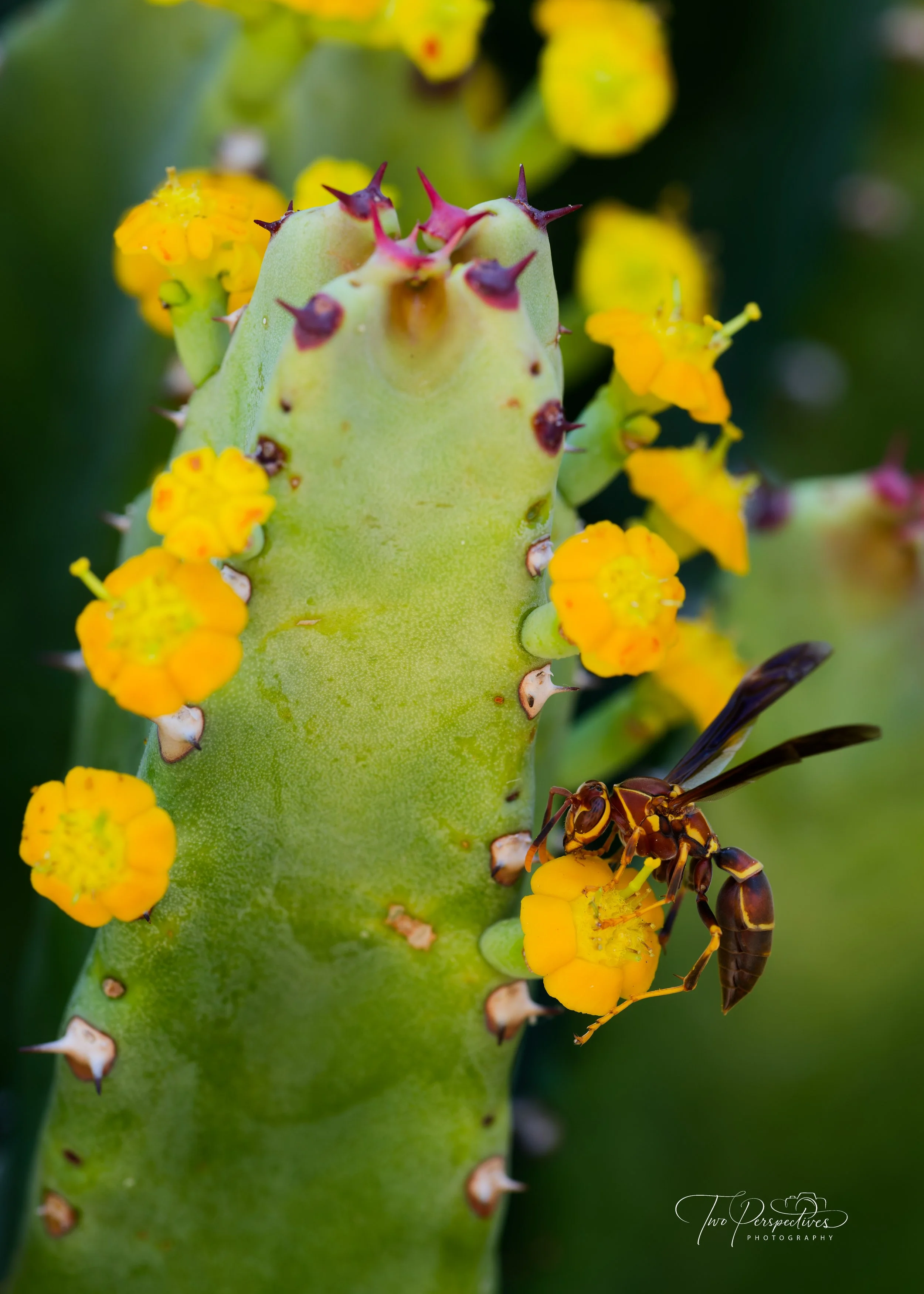
Paper wasps are genuinely beneficial insects. They hunt caterpillars and other garden pests, and adults also visit flowers, making them incidental pollinators as well. Away from their nests, they are not aggressive. They do not patrol territory or pursue people, and they are very unlikely to sting unless you grab one or push directly into their nest.
That said, they are wasps, and unlike honey bees, a paper wasp can sting more than once. If a nest is in a high-traffic spot, treat it with the same caution you would give any other stinging insect. Give it space, avoid sudden movement nearby, and if it creates a genuine safety problem, a pest management professional can remove it. If the nest is somewhere out of the way, leaving it alone through the season is the easiest option. By fall it will be empty.
Telling paper wasps apart from yellowjackets is worth knowing. Yellowjackets are stockier, marked with bright yellow and black, and they build enclosed paper nests that look like a gray football or are hidden in the ground. Paper wasps are slimmer, usually brownish or yellowish with more muted markings, and their long legs dangle noticeably during flight. The open-celled nest is the clearest giveaway: if you can see directly into the cells, it is a paper wasp nest, not a yellowjacket nest.
Where and when to find them
Paper wasps are active from early spring through late fall. The first individuals you notice in April or May are usually founding queens looking for nest sites or just getting started. By late summer the colonies are at their largest and most active.
Look for nests tucked under eaves, along the underside of porch railings, on fence posts, inside open outbuildings, and in shrubs and low desert vegetation. In the Tucson area they turn up in backyards, desert washes, and along hiking trails from the desert floor up into the foothills of the Santa Catalinas. Wherever there is bare wood nearby and a sheltered overhang above, a paper wasp has probably already evaluated the spot.
Capturing them
Paper wasps at flowers are a consistently rewarding macro subject. Their banded bodies contrast well against flower colors, and when they are foraging they are focused on the flower and largely oblivious to a slow, patient photographer. A longer 185mm macro lens gives useful working distance and keeps you out of their space.
The nest is the more challenging and more rewarding subject. A nest with larvae visible in the cells, or a wasp actively adding pulp to a new cell, shows something genuinely uncommon in insect photography. Shoot in early morning when the wasps are slower and the light is still soft. Move slowly, stay calm, and avoid casting a shadow over the nest. Early fall is also worth watching for newly mated queens and males on vegetation before they disperse. Those late-season individuals tend to be among the calmest wasps you will encounter.
Paper wasps are easy to overlook and easy to underestimate. They are also, once you start paying attention, one of the more interesting insects around the yard.