Mexican Jay
Walk into an oak canyon in the Chiricahuas or up through Madera Canyon and you will almost certainly hear the Mexican Jay before you see it. A loud, rough wenk or shrink, repeated fast. Then the flash of dull blue wings in the oaks, and suddenly you have a dozen of them moving through the canopy around you. They are not shy. They come close, hop between branches, and seem genuinely curious about what you are doing in their territory. We have spent more than a few mornings simply standing still and letting them work around us.
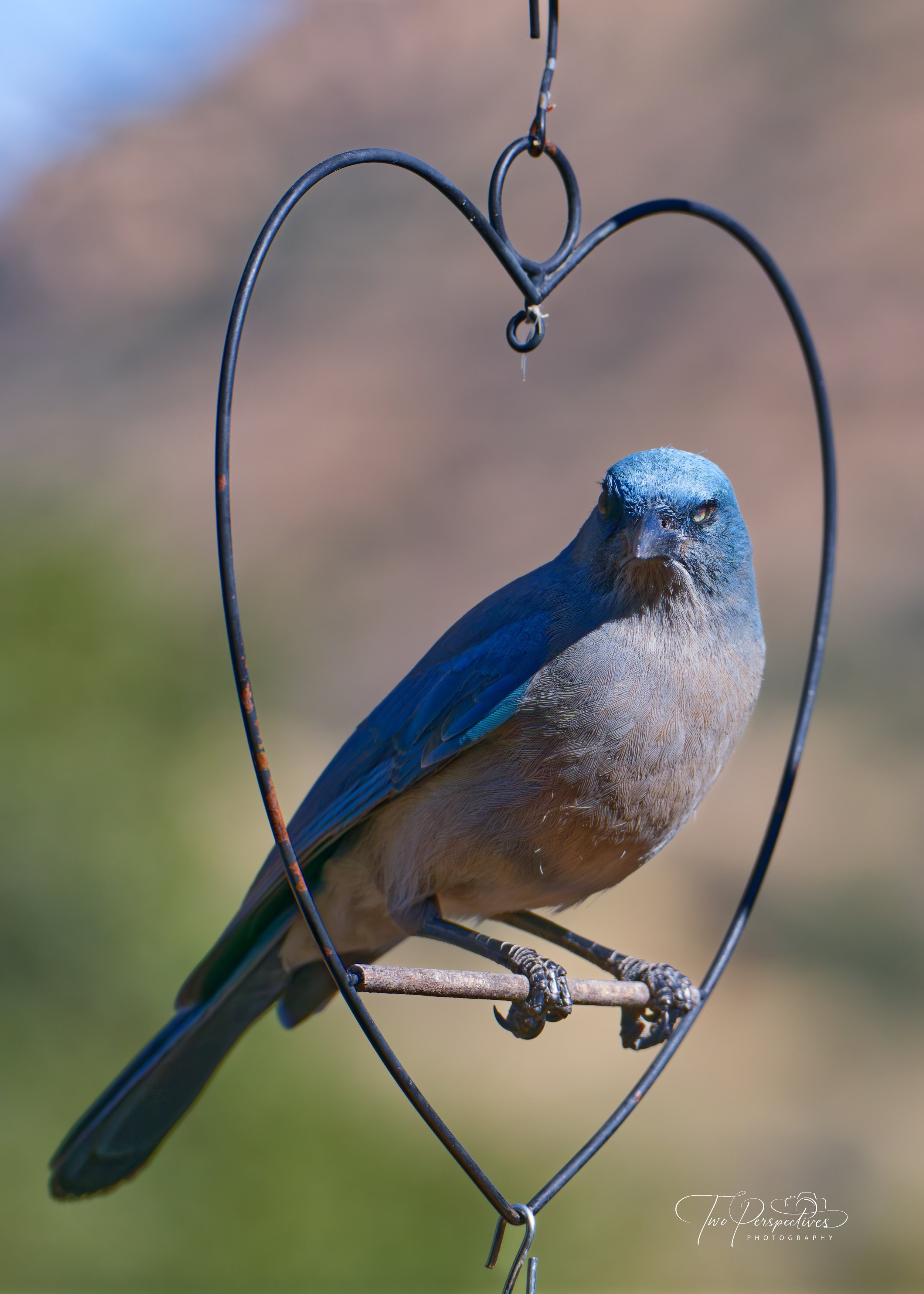
A blue bird built solid
The Mexican Jay is a chunky, medium-sized bird. Adults run about 10 to 12 inches long with a wingspan of 16 to 17 inches, putting them roughly between a robin and a crow in size. They weigh between 2.3 and 3.2 ounces, and you can feel that stockiness in how they move: deliberate, confident, not flighty.
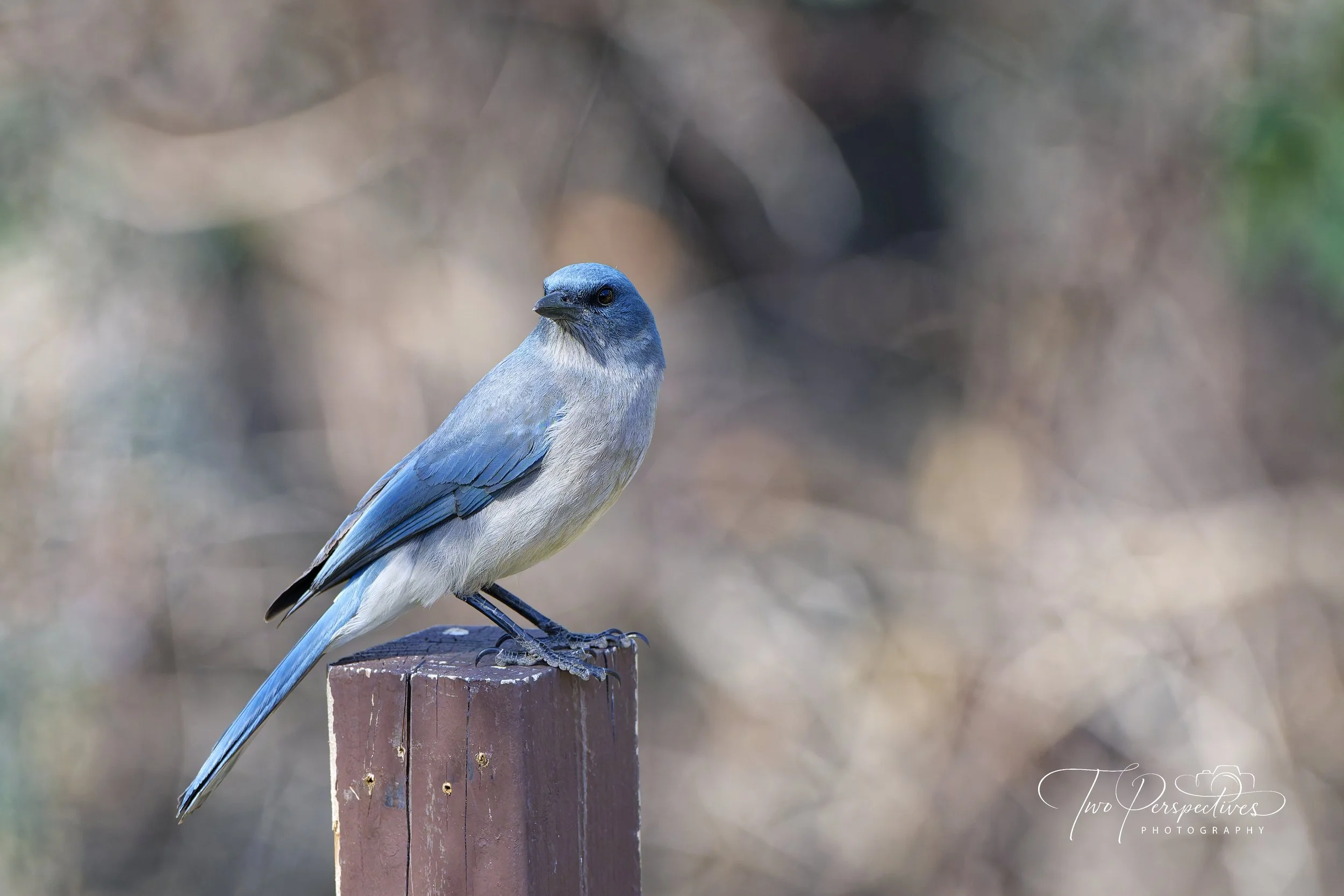
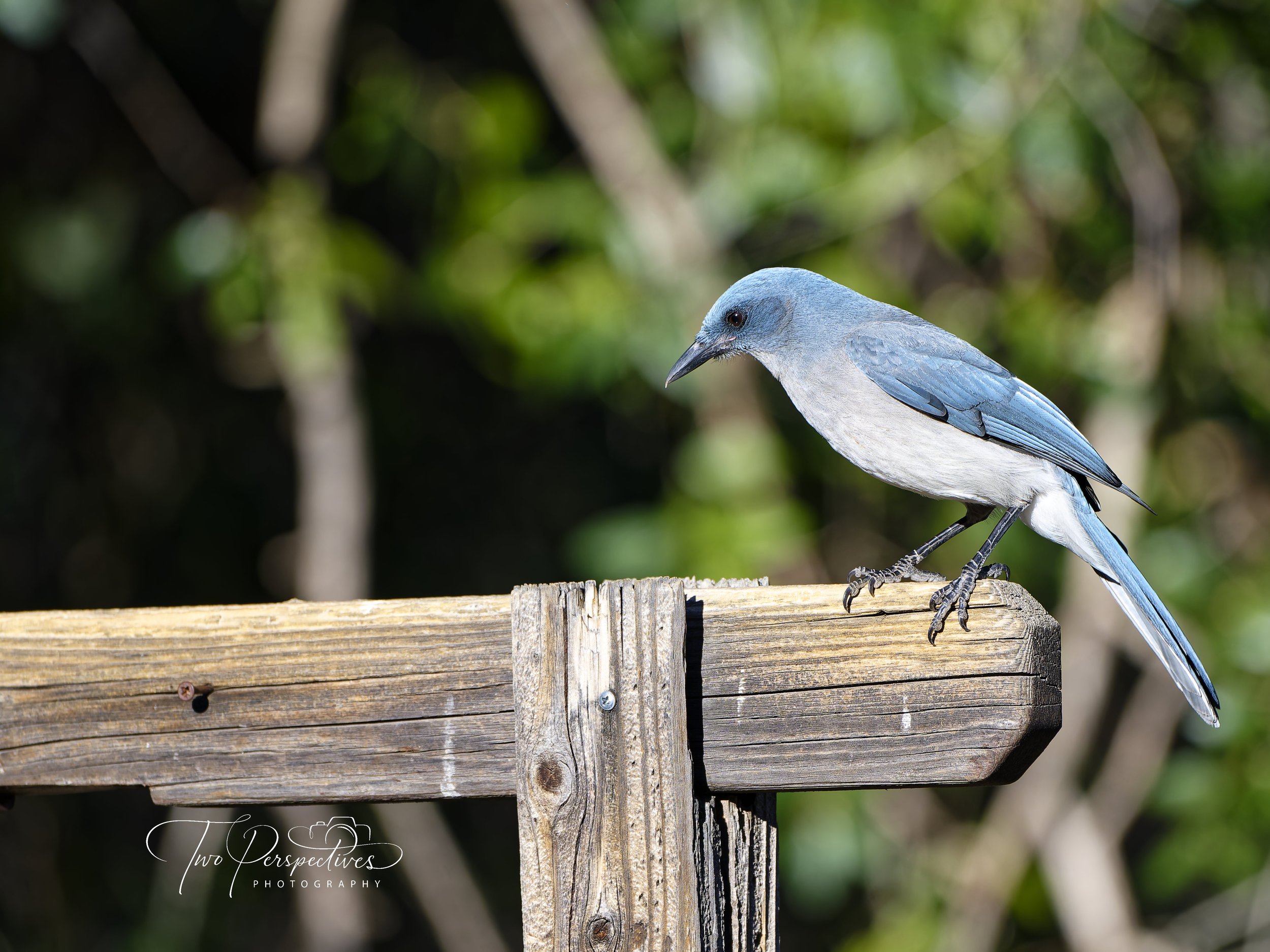
The plumage is plain and understated. The back, wings, and tail are a dull grayish blue. The underparts are smooth pale gray. There is no streaking on the throat, no necklace, no flashy contrast. Sexes look alike. Juveniles in Arizona and New Mexico have noticeably pale bills that gradually darken to black over their first couple of years. It is one of the more reliable ways to pick out a young bird in a mixed flock.
If you have seen a Woodhouse's Scrub-Jay, you might wonder at first glance whether you are looking at the same species. The Mexican Jay is heavier built, and the key difference is that unstreaked, unpatterned throat and breast. The scrub-jay looks like it is wearing a necklace against a white bib. The Mexican Jay does not.
Our wild neighbors
The Mexican Jay's footprint in the United States is a small one. It enters the country in two places: the mountain ranges of southeastern Arizona and adjacent New Mexico, and the Big Bend area of western Texas. These two US populations are geographically isolated from each other and differ in egg color, the bill color of young birds, voice, and some details of nesting behavior.
The Arizona and New Mexico population is the one we know here in Tucson. These birds live in the sky island mountain ranges, which is exactly the habitat the name implies: forested mountain ridges rising out of desert grassland, close enough to Mexico to share species you would not expect to find this far north. The Mexican Jay lives in oak woodlands and mixed oak-pine forests in canyons and on lower mountain slopes, typically up to about 7,000 feet elevation. The Chiricahua Mountains, the Huachuca Mountains, the Santa Ritas, the Catalinas, and the Rincons all hold them.
This species is one of the most sedentary birds in North America. Flocks almost never move away from their immediate breeding territory. The same territory may be defended by the same flock for generations. Compared to the migratory hustle most birds go through twice a year, these jays live out their entire lives in a remarkably small patch of mountain forest. Year-round, reliable, always there.
A few fun facts
Cooperative breeding is the big story. Within a flock, two to four females may nest at the same time. Other flock members, including birds from previous seasons, feed the incubating females on the nest. Once the young hatch, both parents and additional flock members help feed them. The young may continue to be fed by flock members for several weeks after they leave the nest.
Permanent territories can hold for generations. Flocks defend the same ground long term, which means if you found Mexican Jays in a canyon ten years ago, there is a good chance their descendants are still in that exact spot.
The diet shifts with the season. Acorns and pine seeds dominate from fall through winter. Insects take over in summer, including grasshoppers, beetles, and caterpillars. They also eat lizards, small snakes, and other birds' eggs when available.
They cache food. In fall, Mexican Jays harvest acorns, bury them in the ground, and come back for them later. They are good at remembering where they hid them.
The species was formerly known as the gray-breasted jay. In 2011, the American Ornithologists' Union split what was then a single wide-ranging species into two, with the populations in the Transvolcanic Belt of central Mexico becoming the Transvolcanic Jay. The northern birds, including the ones in Arizona, kept the common name Mexican Jay and received the scientific name Aphelocoma wollweberi.
Where and when to find them
Southeastern Arizona is the heart of the US range, and the mountain canyon trails there are the most reliable places to find them. Madera Canyon in the Santa Ritas is consistently one of the best spots, especially along the lower and middle trail sections through the oaks. The gift shop near the canyon entrance has a small coffee shop where visitors can grab a drink and sit on the outdoor benches while watching the birds at the feeders. Several feeder types are set up there to draw in a variety of species, and Mexican Jays are regulars. The Chiricahua Mountains, particularly Cave Creek Canyon and the South Fork area, are excellent. The Huachuca Mountains, Miller Canyon, and the Patagonia area all hold them as well.
Because they are year-round residents and almost never leave their territories, you can visit any month and find them. They are most active and vocal in the mornings. Listen for that sharp repeated call in the oaks. Once you hear one, you will usually find the whole flock within a few minutes.
Capturing them
Mexican Jays are a photographer's friend. They are bold and curious, and they tend to work through an area methodically rather than flushing and disappearing. If you stay still and let them come to you, they often will. We have had birds land within ten feet and sit there long enough for a full portrait session.
The dull blue plumage can look flat in harsh midday light, so morning hours in the canyon shade are ideal. Watch for the moments when a bird is actively working an acorn or hopping to a new branch. They have expressive faces, and the pale bills on juveniles make for a nice contrast against the blue.
They will also turn up in unexpected places. We filmed one recently playing in a garden water fountain, bathing and splashing and generally making a production of it. Water features can draw them in just as any food source or curiosity does, and they are not in a hurry to leave once they find one, which gives you time to get your shot.
Flocks move through an area and then are gone, so it pays to follow along slowly rather than staying in one spot hoping they come back.
Up next in our spotlight series: keep an eye out for more of the Sonoran Desert's remarkable residents.