Western Honey Bee
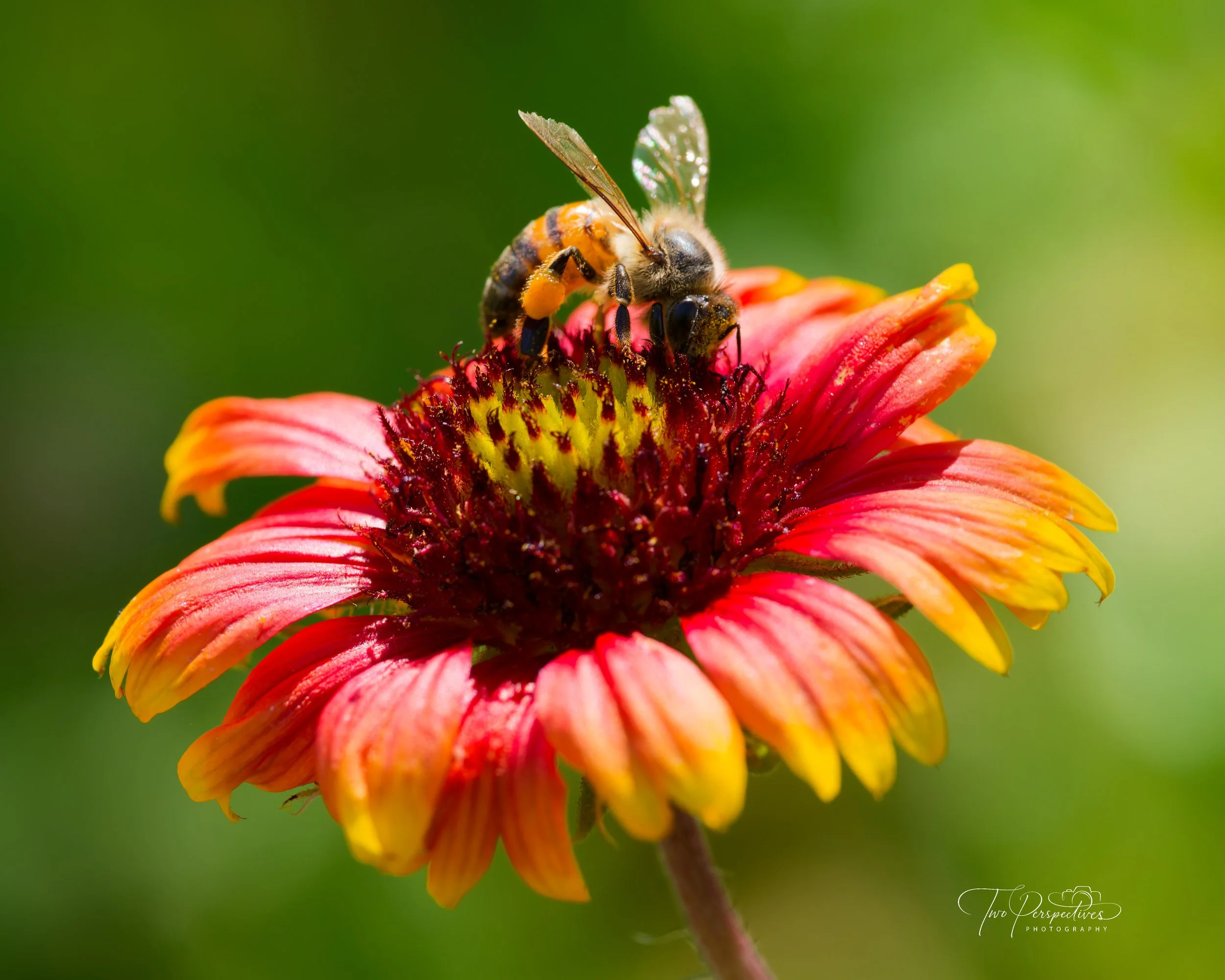
In late spring, when the saguaro arms erupt in white blossoms against the blue desert sky, the honey bees arrive. They work the flowers one by one, their bodies so deep in the blooms that they come away dusted head to thorax in white pollen. It is one of the most quietly spectacular scenes the Sonoran Desert has to offer, and every year we look forward to it.
The saguaro season
A saguaro flower opens for less than 24 hours, and in that window, visiting pollinators have to find it, work it, and move on. Studies of saguaro pollination have found that honey bees are the greatest daytime contributors, visiting dozens of flowers during the bloom period that runs from early May through early June in southern Arizona. Watching a bee disappear into one of those massive white cups and then emerge with its legs and thorax coated in pollen is the kind of moment that reminds you how much is happening in the desert all the time.
Our wild neighbors
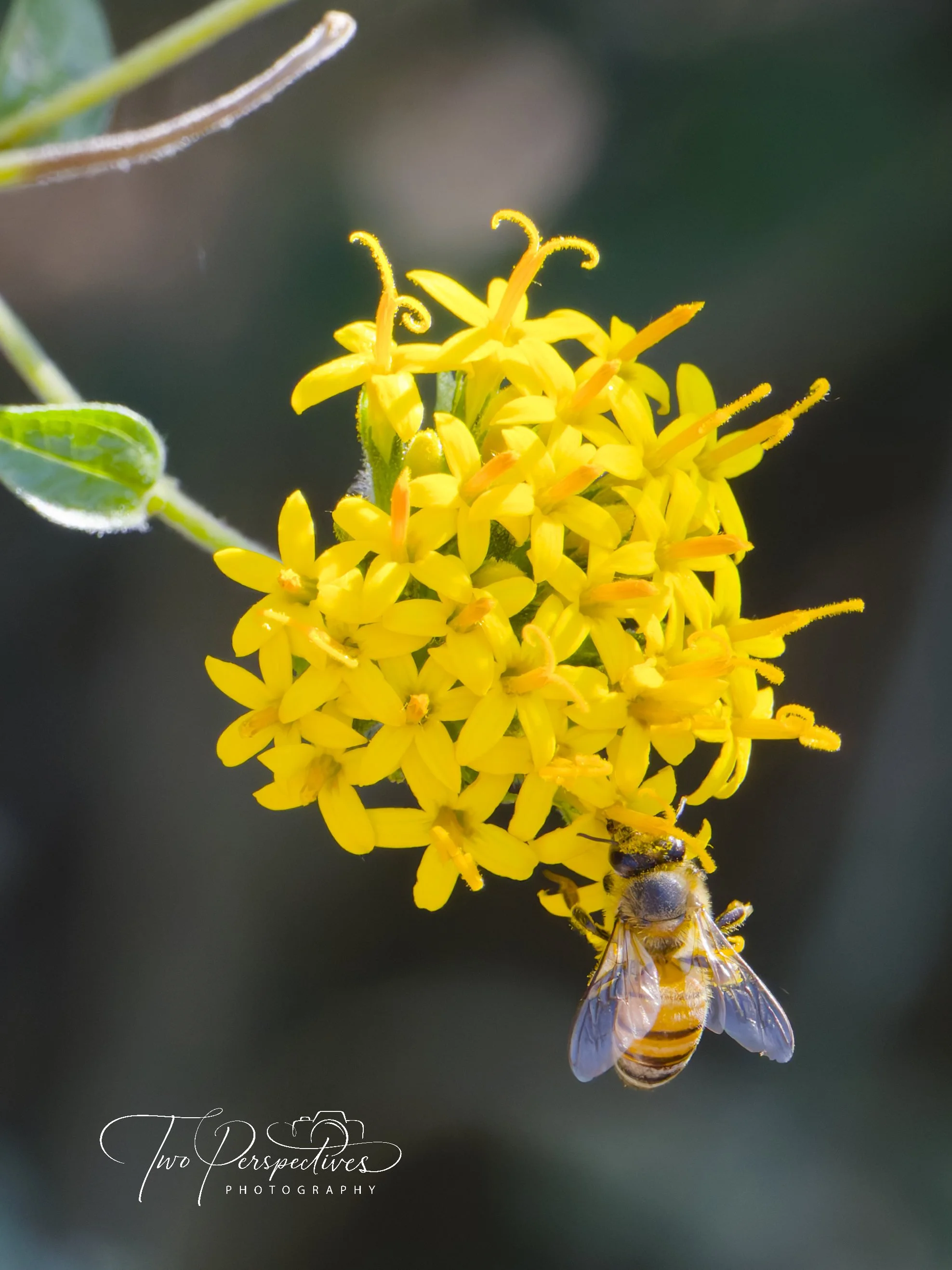
Western honey bees are not native to North America. European colonists brought them in the early 1600s, and since then, they have become one of the most widespread insects on Earth. They are now deeply embedded in the ecology of the Sonoran Desert, pollinating saguaro cactus, palo verde trees, desert wildflowers, and countless other plants.
The bees you encounter in the wild around Tucson are almost certainly not the European subspecies from a managed hive. In the early 1990s, Africanized honey bees spread into southern Arizona after decades of moving northward from South America. A study of swarms trapped in the Tucson region found that 15 percent were Africanized in 1994. By 1997, that number had climbed to 90 percent. Feral colonies in southern Arizona are now predominantly Africanized, and that includes the swarms working the saguaros and the bees visiting your garden.
A few fun facts
At peak season in midsummer, a healthy colony can hold 40,000 to 80,000 individuals, all coordinated through a complex system of chemical signals and physical communication.
Colonies reproduce by swarming in spring. The old queen departs with a large portion of the worker population to found a new nest. The remaining bees raise a new queen from existing eggs.
Drones, the males, exist to mate. They are produced in spring and summer and are expelled from the hive each fall as the colony conserves resources.
Worker bees communicate the location of good food sources through the waggle dance, a figure-eight movement that encodes both direction and distance to the target. Karl von Frisch won the Nobel Prize for decoding it.
Honey bees hold a perennial colony, meaning the same colony can persist year after year. This makes them unusual among stinging insects, many of which start fresh each spring from a single overwintered queen.
Living alongside wild bees in Arizona
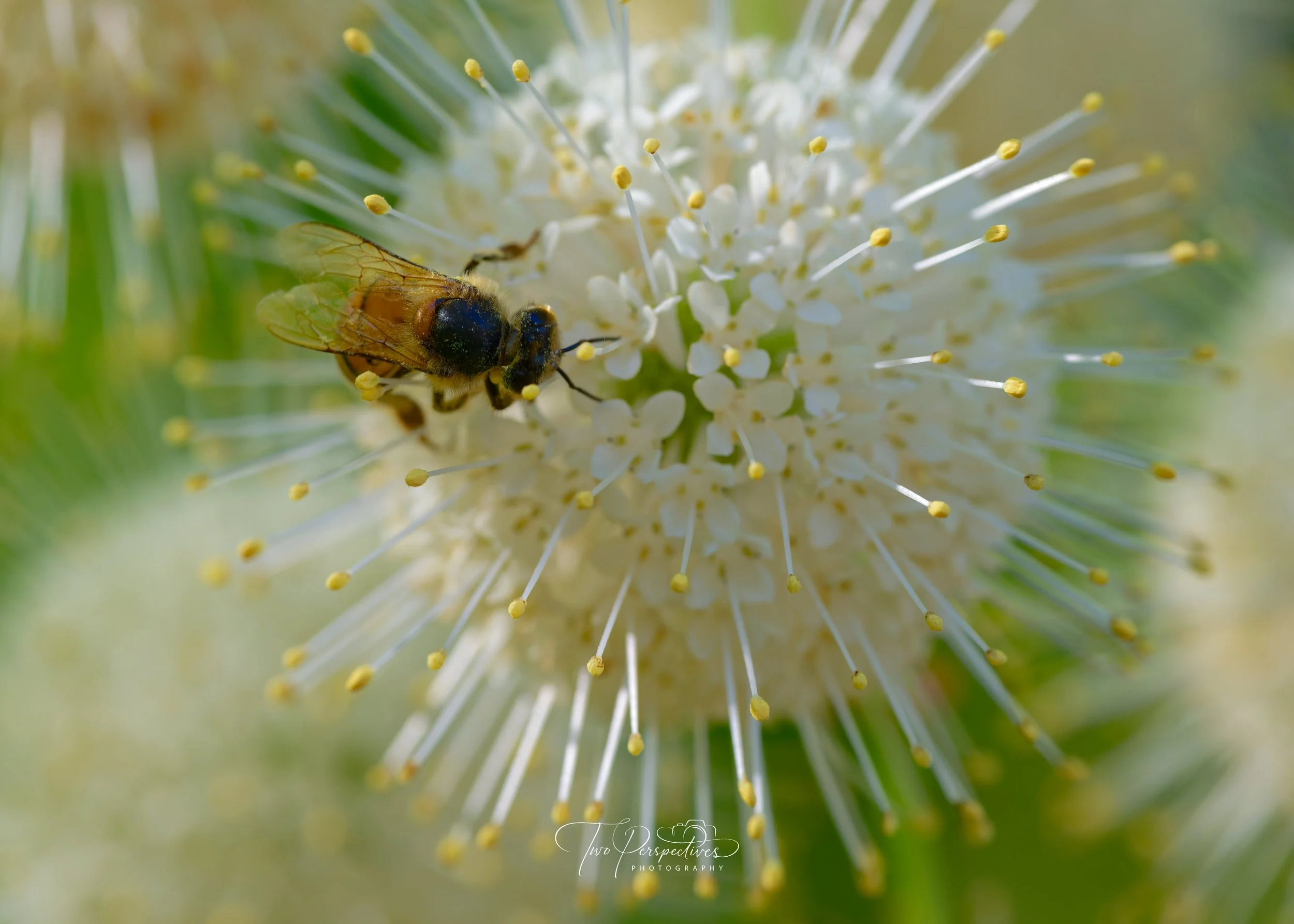
Africanized honey bees carry the same venom as European honey bees. The sting is no more toxic. What makes them different is the defensive response: they react faster, deploy more guard bees, and can pursue a perceived threat up to about 400 meters from the colony. That is a meaningful behavioral difference, and it is worth understanding.
The practical guidance is straightforward. Give feral colonies space. Do not disturb them, throw things at them, or try to block or seal a nest entrance. If you find a swarm cluster hanging from a mesquite limb or fence rail, leave it alone. Swarms have no nest to defend and are generally calm. In a day or two they will move on. If you want them removed rather than waiting, contact a local beekeeper. Many will relocate a swarm at no cost.
If a colony has established itself inside a wall, roof soffit, or storage shed, that is a different situation and warrants a professional assessment. A licensed beekeeper or pest control operator can advise on options. Killing a colony without removing the comb creates follow-on problems, including honey leaks into walls and the attraction of new swarms to the same site. Rehoming the colony and removing the comb is usually the better path.
These are pollinators doing critical ecological work. The goal is to coexist where possible, relocate when necessary, and exterminate only as a genuine last resort.
Where and when to find them
The saguaro bloom, typically running from early May through early June around Tucson, is the most photographically spectacular time to be out with bees. Both districts of Saguaro National Park offer miles of saguaro forest during peak bloom. The Tucson Mountain District to the west and the Rincon Mountain District to the east are both productive and accessible. Catalina State Park and Sabino Canyon are also good options.
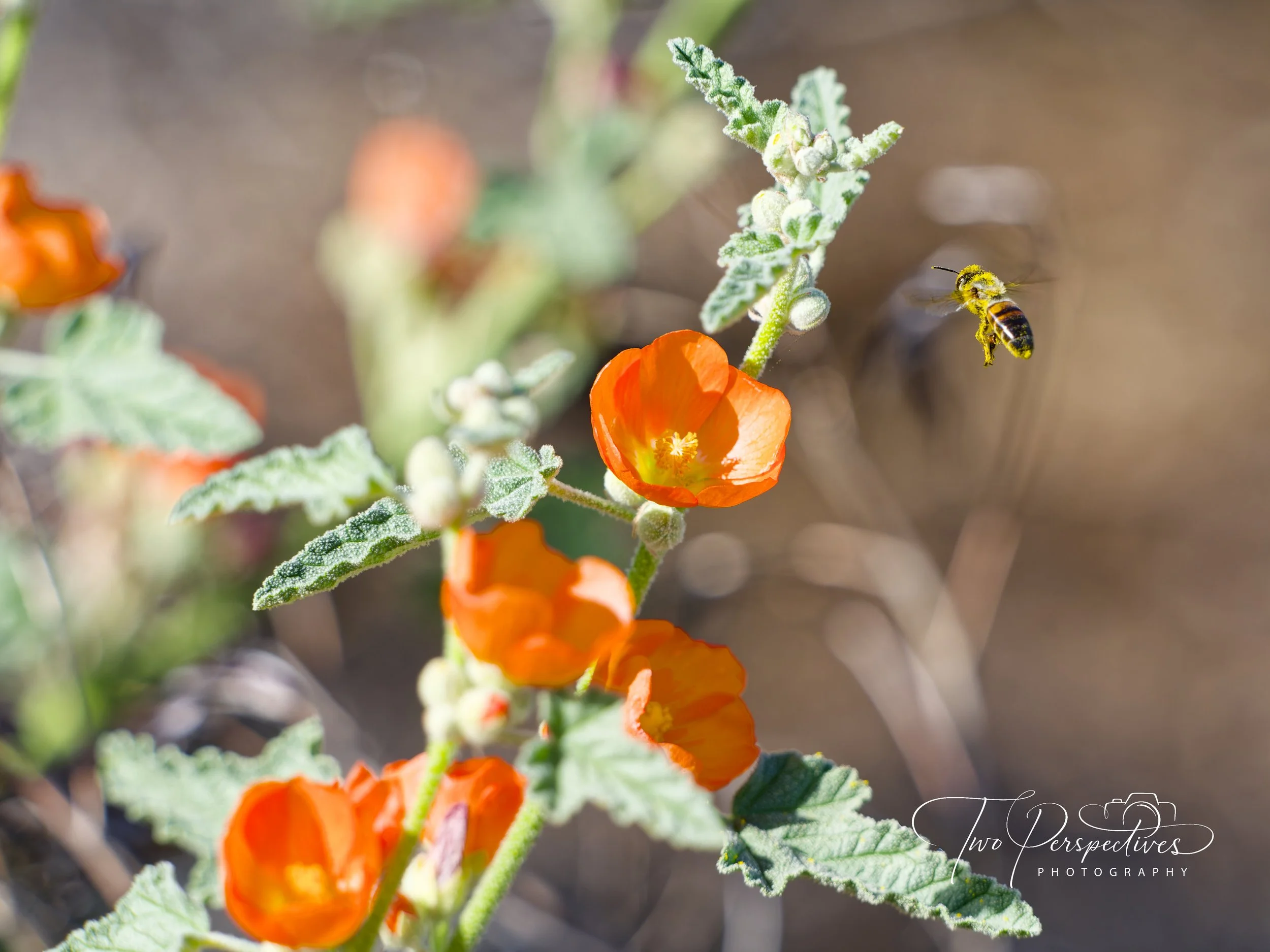
Desert wildflowers in spring draw large numbers of bees, particularly in good rain years when brittlebush, globe mallow, and desert marigold light up the washes and bajadas. In summer, shallow water sources attract bees by the dozens as temperatures climb. Slowly seeping or dripping water sources are especially productive. Year-round, any flowering plant in a Tucson garden will have bees working it at some point.
Capturing them
The saguaro bloom is the centerpiece shot, and it rewards patience. A long lens lets you work from a comfortable distance, but a macro lens gets you into the flowers alongside the bees. The best light is in the first couple of hours after sunrise, when bees are already active but shadows are still long and the sky is still a rich blue. Position yourself below the flower if you can, looking up, to get the bee against the sky rather than the cactus.
Swarm clusters are another underrated subject. A freshly landed swarm forms a dense, hanging mass of bees, and because swarms have no nest to defend, they are remarkably calm. Work from a respectful distance with a macro or telephoto, let the bees do their thing, and the textures and sense of concentrated life in a swarm cluster will take care of themselves.
At flowers, move slowly. Bees are focused on foraging and largely ignore a careful, patient photographer. Sudden movements are more disruptive than proximity. If you are near feral colonies rather than foraging bees, maintain respectful distance and avoid blocking the colony entrance.
Every one of these encounters, whether you are standing under a saguaro in bloom or watching a bee work through a penstemon, is a reminder of how much of the desert's abundance runs quietly on the activity of bees.