Blue-throated Mountain Gem
Most hummingbirds make you lean in to see them clearly. The Blue-throated Mountain Gem, known until recently as the Blue-throated Hummingbird, has the opposite problem. It's so large and moves with such commanding presence that the first time you see one at a feeder alongside other hummingbirds, your brain briefly refuses to accept that it's the same kind of bird. The largest hummingbird regularly occurring in the United States, the Blue-throated Mountain Gem doesn't dart and vanish like its smaller relatives. It arrives, it lands, and it holds its ground.
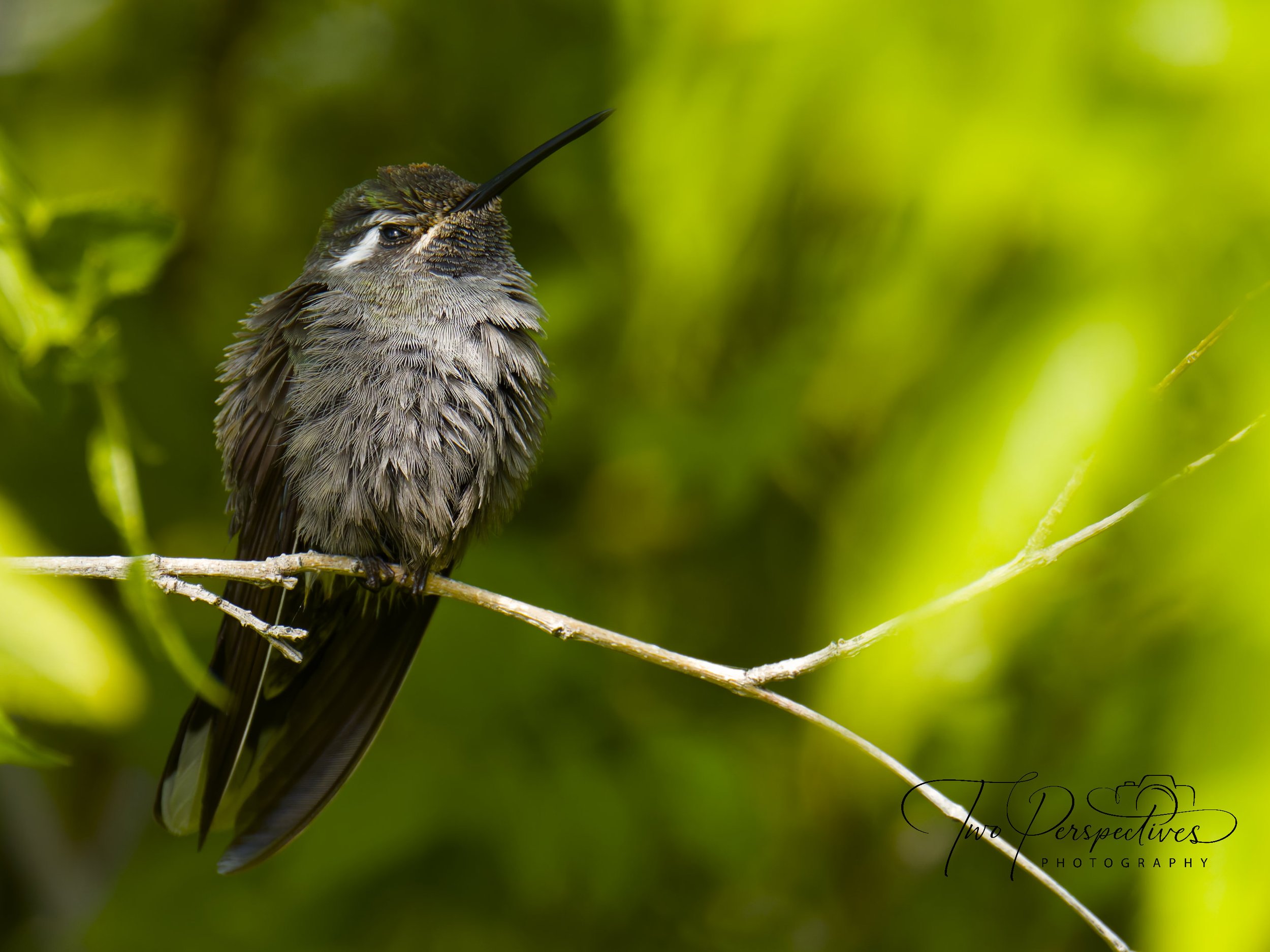
Built like a hummingbird shouldn't be
Everything about the Blue-throated Mountain Gem runs counter to what most people picture when they think "hummingbird." It's heavy-bodied, broad-winged, and deliberate. The male's most striking feature, that brilliant sapphire-blue throat, is vivid and unmistakable in good light, set against a dark gray-green body. But the tail is the true field mark: large, dark, and broadly tipped in bold white patches that flash with every pump and flare. At rest or in flight, those white tail corners catch the eye before anything else. No other hummingbird in the US shows anything quite like it.
Our wild neighbors
The Blue-throated Mountain Gem is a bird of mountain canyon streams, and in the United States it exists as a narrow slice of a much larger Mexican population. The sky island ranges of southeastern Arizona, the Huachuca, Santa Rita, and Chiricahua Mountains, represent the primary US range, with a second small population in the Chisos Mountains of southern Texas. Within those canyons it's a true resident, not just a visitor, holding territories along fast-moving streams lined with sycamores and maples and nesting in the canyon understory. Madera Canyon in the Santa Rita Mountains is one of the most accessible and reliable spots to find one in the world, and hummingbird enthusiasts travel from across the country to see it there.
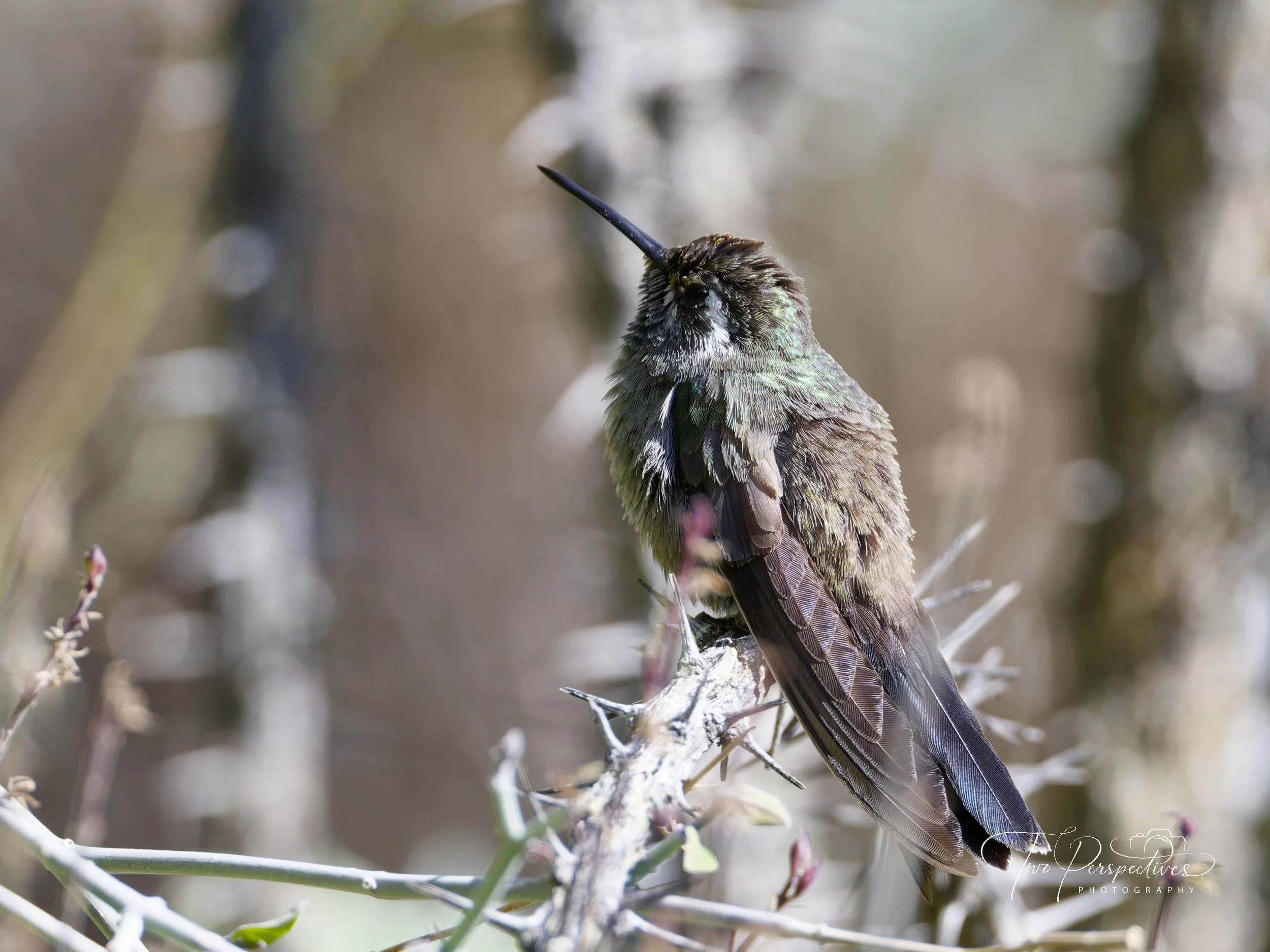
The Tucson valley is a different story. The Blue-throated Mountain Gem almost never descends to the desert floor, preferring the cooler elevations of the mountains that ring the city. Which is what made November 24, 2025 so extraordinary. On that date, a Blue-throated Mountain Gem appeared on the grounds of the Arizona-Sonora Desert Museum, the first time one had ever been recorded there. We happened to be there that day and photographed it, a moment that underscores just how rare a valley sighting of this bird truly is.
A few fun facts
The Blue-throated Mountain Gem was officially renamed from "Blue-throated Hummingbird" in 2023, when taxonomists split the species from its close Mexican relative. The "Mountain Gem" family name reflects the group it now belongs to.
It is the largest hummingbird species that breeds in the United States, noticeably bigger than other species at a shared feeder.
The male produces a loud, repeated, high-pitched call note, remarkably loud for a hummingbird, that can be heard from a considerable distance along the canyon.
Unlike smaller hummingbirds that are almost constantly in motion, the Blue-throated Mountain Gem will perch in an exposed spot for extended periods, giving observers long looks that are rare with other species.
The female is similar to the male in size but lacks the blue throat, showing the bold white tail patches as the key field mark she shares with the male.
Attracting them
The Blue-throated Mountain Gem is a mountain canyon bird and not a realistic backyard visitor for most of the Tucson metro area. However, properties in the foothills and canyons at the right elevation can and do attract them to feeders, particularly in the Santa Ritas and Huachucas. If you're in that kind of terrain a well-maintained feeder and native riparian plantings along any water feature give you a chance. For everyone else, a day trip to Madera Canyon is the most reliable path to a close look.
Where and when to find them
Madera Canyon in the Santa Rita Mountains is the premier destination, with birds present from spring through fall and occasional winter individuals. The Huachuca Mountain canyons, including Cave Creek Canyon in the Chiricahuas, are also excellent. Spring arrival is typically in April, with birds remaining through the summer breeding season. Listen for the loud repeated call note, once you know it you'll hear the bird before you see it. The feeders at the Santa Rita Lodge in Madera Canyon are among the most reliably productive spots in the country for this species.
Capturing them
The Blue-throated Mountain Gem offers something rare in hummingbird photography: patience. It perches. It sits. It gives you time to set up, adjust the exposure, and wait for good light, which most hummingbirds simply refuse to do. The photographic goal is catching that sapphire throat ignited in good light with the white tail corners visible, ideally in a hover at a flower or feeder. The canyon light at Madera in the morning hours is beautiful, and with a bird that will actually hold still long enough to work with, the results can be exceptional.